


Building Faster?
Most Canadians support the federal government’s intention to act quickly to expand the country’s infrastructure, but not in the absence of agreements with its provincial or Indigenous partners.
May 11, 2026
May 11, 2026Reportconfederation of tomorrow,indigenous peoples,federalism,politics
Looking for something specific?
Public support for autocratic leaders in Canada and the USA
In the current political context, how do Americans and Canadians feel about the powers afforded to their national leader over other branches of government and the media?
February 23, 2026
February 23, 2026politics,united states,democracy,americasbarometer,populismReport
The Atlantic Provinces in Confederation
All four Atlantic provinces have experienced significant political changes in the past year. These developments have taken place against the backdrop of additional major political change at the national and international level.
January 20, 2026
January 20, 2026confederation of tomorrow,federalism,politics,canadian identityReport
Trust in Political Institutions in Canada
The results of the latest survey, conducted in the summer of 2025, provide a comprehensive update. They show that the extent to which Canadians trust political actors and institutions has, in most cases, held steady over the past 15 years. In some cases, trust has increased.
January 8, 2026
January 8, 2026politics,social capital,americasbarometer,trustReport
Respect and influence in the Canadian federation
Every year since 2019, the Confederation of Tomorrow survey has been asking Canadians the following three questions about respect, influence and spending in the federation.
December 18, 2025
December 18, 2025confederation of tomorrow,federalism,politicsReport
Democracy and the fairness of elections in Canada
Satisfaction with democracy, trust in elections, and the sense that votes are always counted fairly, have all declined steadily and significantly among Conservative Party supporters since the party lost power a decade ago – and in the context of four consecutive election losses.
November 21, 2025
November 21, 2025politics,democracy,americasbarometer,civic engagementReport
Climate Policy in the Federation
Public concerns about climate change notwithstanding, Canadians are placing increasing priority on economic security over the importance of reducing carbon emissions.
September 21, 2025
September 21, 2025confederation of tomorrow,environment,federalism,politics,climate changeReport
The Prairies and B.C. in Confederation
This report draws on the most recent Confederation of Tomorrow survey to present an updated picture of how Western Canadians view their province’s place in the federation. The survey finds that, rather than growing, levels of dissatisfaction in the three Prairie provinces with how federalism works in Canada declined between 2024 and 2025.
August 20, 2025
August 20, 2025confederation of tomorrow,federalism,politicsReport
Ballot questions
As part of its Focus Canada public opinion research program (launched in 1976), the Environics Institute examined the ballot questions for the April 2025 federal election by asking voters to identify which issue was the most important to them personally in choosing which party to support.
August 5, 2025
August 5, 2025focus canada,politics,economy,united states politics,youthReport
Working together in the Canadian federation
Two main political events since the start of this year have affected the context in which the relations between governments in Canada are evolving. First, the imposition of U.S. tariffs, combined with the American president’s threats against Canada’s independence, have created a new sense of urgency.
July 20, 2025
July 20, 2025confederation of tomorrow,federalism,politics,government roleReport
Attachment and Identity
The issues of Canadian identity and unity came to the fore in the first few months of 2025, in the face of the threatening policies and pronouncements of returning U.S. president Donald Trump.
June 26, 2025
June 26, 2025confederation of tomorrow,federalism,politics,canadian identityReport

Pride in Being Canadian
Previous Focus Canada surveys have documented a decline in the proportion of Canadians who are proud of being a Canadian. But in the wake of the developments since the return of U.S. President Donald Trump to the White House, has there been a resurgence of national pride in Canada?
June 12, 2025
June 12, 2025focus canada,politics,canadian identity,valuesReport
Public Opinion About Canada-USA Relations
Canada and the United States have enjoyed a strong relationship for more than a century. There have been ups and downs depending on the respective leaders in each country, but underneath remained a solid foundation of trust and partnership.
June 6, 2025
June 6, 2025focus canada,politics,united states politicsReport
Inter-generational Mobility in Canada
The 2024 survey finds that the proportions of Canadians who feel financially worse off today than their parents were at their age, and who feel that the next generation will be worse off than they are, are both trending upwards.
November 13, 2024
Canadians and the U.S. Presidential Election
The American presidential election has transfixed not only citizens of the United States, but many around the world as well. One way or another, everyone will be affected by the outcome of the vote on November 5.
October 14, 2024
October 14, 2024focus canada,politics,united states,united states politicsReport

Reconciliation and Relations with Indigenous Peoples
How do Canadians today see relations between Indigenous and non-Indigenous people and how the process of reconciliation unfolding? Confederation of Tomorrow surveys have been addressing this topic since 2019, and the 2024 survey provides a fresh update on public attitudes from both Indigenous and non-Indigenous perspectives, and how they have evolved over time.
June 20, 2024
June 20, 2024confederation of tomorrow,indigenous peoples,politics,canadian identity,canadian politicsReport
Federal-provincial relations: public perceptions
The study finds that views on whether federal and provincial governments are working well together have not changed that much over the past two decades. However, compared to the early 2000s, Canadians are less likely to blame both governments equally when conflict arises, and more likely to take sides by blaming either the federal government or their provincial government.
June 6, 2024
June 6, 2024confederation of tomorrow,federalism,politics,canadian politics,democracyReport
Affordable housing: approval of federal, provincial and local governments
The availability and affordability of housing has emerged as a top public policy issue. And it is one in which all governments – federal, provincial and territorial, and local – have a role to play.
April 23, 2024
April 23, 2024confederation of tomorrow,politics,economy,government roleReport
Trusting federal and provincial government decision-making on key issues
Canadians are losing trust in the ability of both the federal government and their provincial governments to deal with key issues such as health care, climate change, immigration or the economy.
April 17, 2024
April 17, 2024confederation of tomorrow,federalism,politics,democracyReport
Trust in Political Institutions in Canada
The AmericasBarometer surveys measure trust in a range of political institutions and actors on a seven-point scale. Here is a summary of the most recent results for Canada, showing the trend since 2010.
March 17, 2024
March 17, 2024politics,social capital,democracy,americasbarometerReport
Support for Democracy in Canada
This report focuses on the extent of public support for democracy in Canada, and examines whether this support has been weakening over time. The analysis is based on the results of the Canadian portion of the AmericasBarometer surveys, which track opinions on a consistent set of questions about democracy and its alternatives.
March 7, 2024
March 7, 2024politics,economy,democracy,americasbarometerReport

Housing Affordability
As immediate concern with the COVID-19 pandemic faded, new issues have appeared on the public’s agenda, the most prominent of which have been the cost of living and the affordability of housing.
November 20, 2023
Citizen Voice
Are citizens feeling increasingly ignored by their governments in Canada? The evidence from the Canadian portion of the 2023 AmericasBarometer survey is mostly reassuring.
October 26, 2023
October 26, 2023politics,democracy,americasbarometer,civic engagementReport
Trust in Elections
Political news headlines in 2023 have been dominated by concerns about potential interference by foreign governments in recent Canadian elections, with opposition parties calling for a public inquiry into the matter.
September 25, 2023
September 25, 2023politics,democracy,americasbarometer,civic engagementReport

Spotlight on Atlantic Canada
The outlook in Atlantic Canada has changed significantly over the past two years. In 2021, almost a year into the COVID-19 pandemic, people in the region stood out from other Canadians as being much more satisfied with the direction of the country in general, and with the way both the federal government and their provincial governments had managed the crisis so far.
July 11, 2023
July 11, 2023confederation of tomorrow,federalism,politics,gender inequality,healthReport

Reconciliation and Relations with Indigenous Peoples
The Confederation of Tomorrow surveys have covered relations with Indigenous Peoples from the beginning in 2019, documenting a gradual shift in Canadian public opinion toward greater support for the rights of Indigenous Peoples and the process of reconciliation.
June 21, 2023
June 21, 2023confederation of tomorrow,indigenous peoples,politicsReport
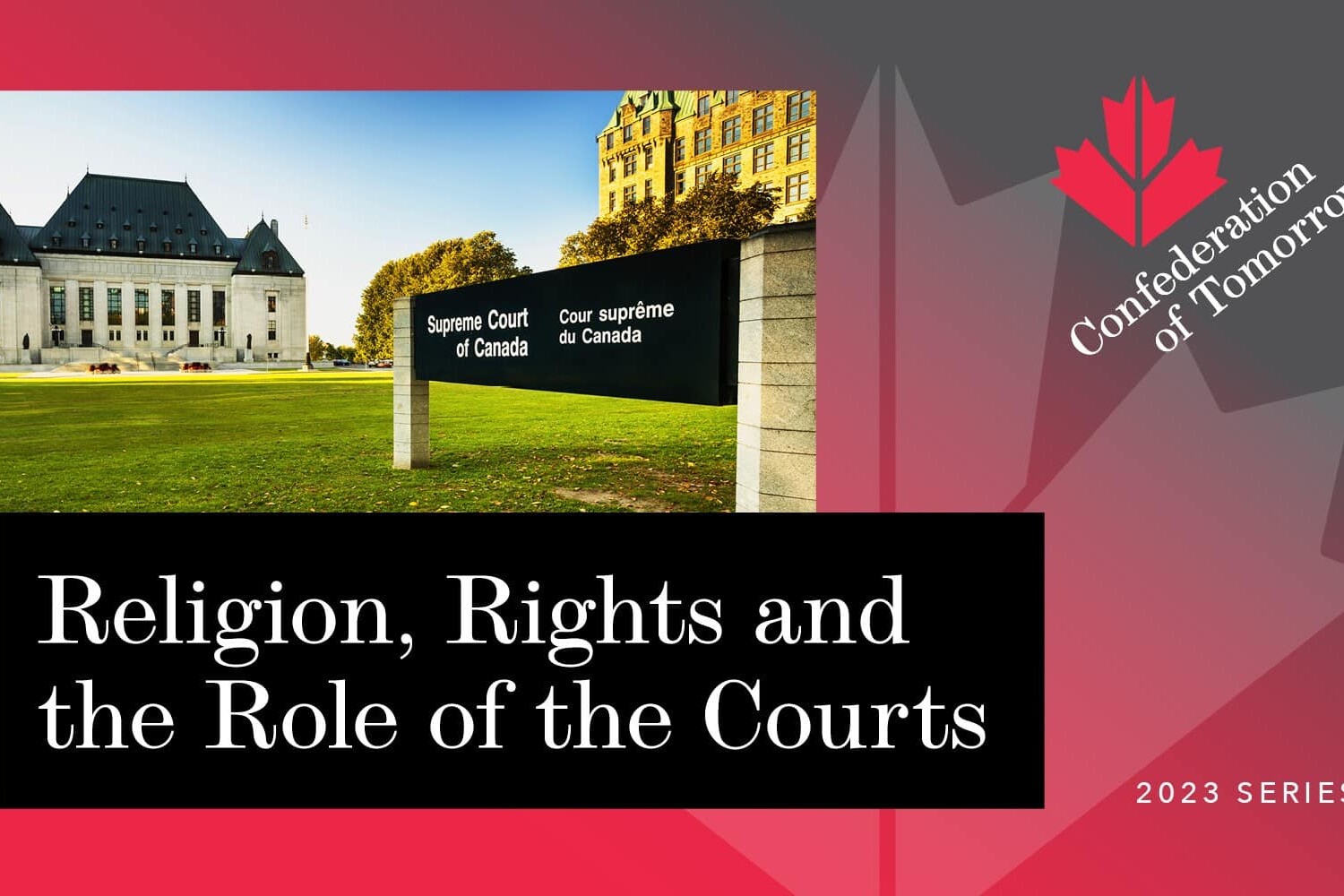
Religion, Rights and the Role of the Courts
Last year marked the 40th anniversary of the Canadian Charter of Rights and Freedoms. While the Charter as a whole remains popular, the occasional use by governments of its provision allowing them to override certain Charter rights (Section 33) continues to spark controversy.
May 29, 2023
May 29, 2023confederation of tomorrow,federalism,politics,canadian identity,values,religionReport

Confidence in Leaders
In 2021, almost a year into the COVID-19 pandemic, the Confederation of Tomorrow Survey of Canadians addressed the issue of public confidence in scientists, government medical advice and political leaders.
May 2, 2023
May 2, 2023confederation of tomorrow,politics,social capital,democracyReport
Support for equalization: 2023 update
Key findings are: Overall support for the equalization program in Canada remains steady; Support has increased in Alberta since 2019; Support remains steady in non-recipient provinces, but has fallen by 8 points since 2019 in recipient provinces. A 29-point gap between levels of support in Quebec and Alberta has narrowed to a 6-point gap.
April 26, 2023
April 26, 2023confederation of tomorrow,federalism,politics,canadian identity,economy,valuesReport

Spotlight on Alberta
In Alberta, the level of discontent with the federation remains high, but has been declining gradually since 2019. This overall change, however, masks two distinct trends. On the one hand, those who support the provincial government continue to express high levels of dissatisfaction with federalism.
April 5, 2023
April 5, 2023confederation of tomorrow,federalism,politicsReport

Satisfaction, Outlook and Opportunities
The survey finds that younger Canadians have grown more dissatisfied with the way things are going in the country, and more pessimistic about prospects for the next generation.
December 16, 2022
December 16, 2022focus canada,politics,canadian identity,economy,COVID-19,democracyReport
Public Opinion in Canada and the United States
The diminishing concern about the impact of free trade on Canada’s cultural identity coincides with some sharp differences of opinion between Canadians and Americans on prominent social issues.
December 9, 2022
December 9, 2022focus canada,politics,canadian identity,racism,government role,democracy,discriminationReport
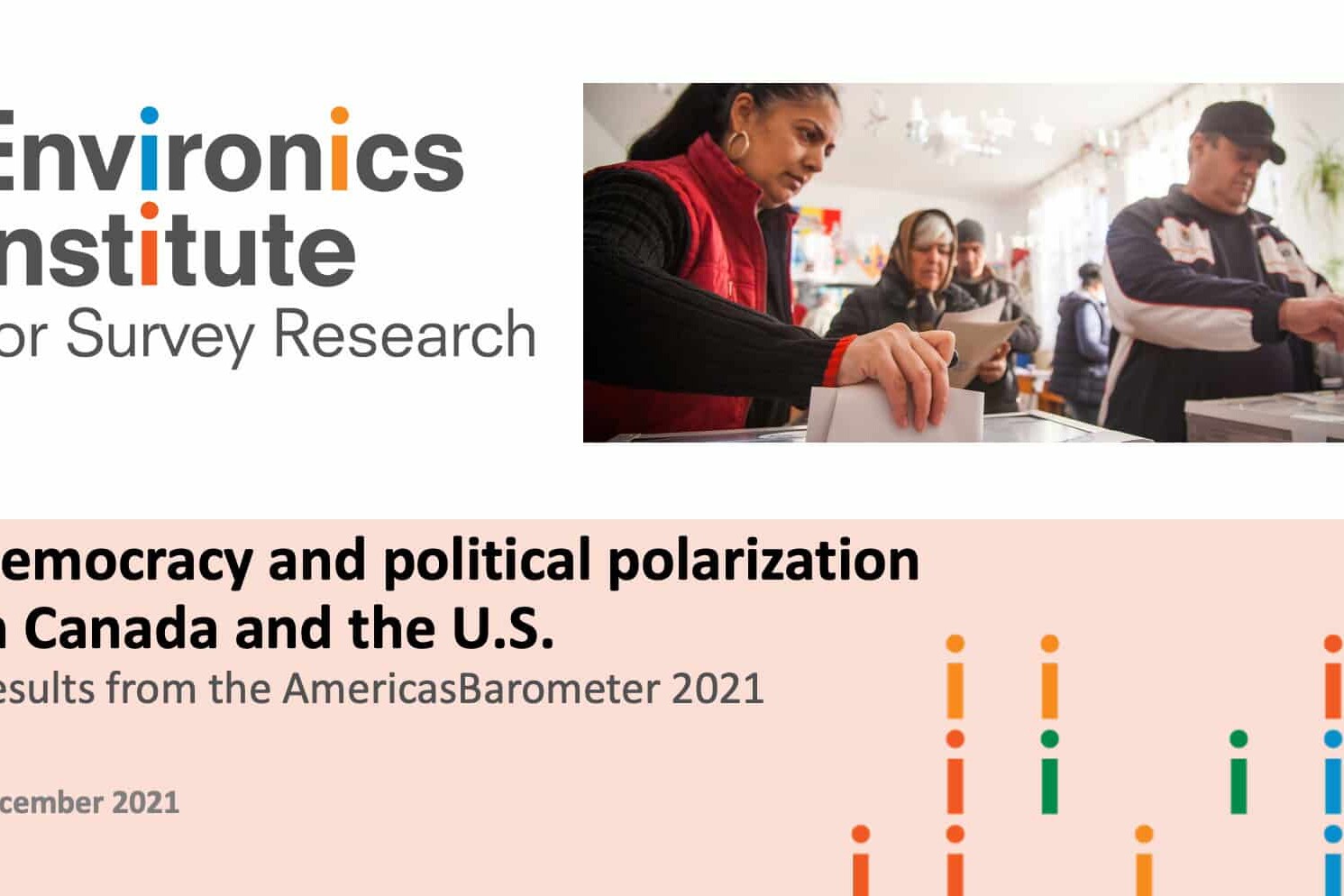
Democracy and Political Polarization in Canada and the U.S.
This presentation compares the results in Canada and the United Sates. It shows that American politics remains highly polarized in several senses; for instance, there are significant gaps in trust in the political system between those who identify as liberals and those who identify as conservatives.
December 20, 2021
December 20, 2021politics,united states,democracy,americasbarometerReport
Respect, Influence and Fairness in the Canadian Federation
Did the federal, provincial and territorial responses to the crisis alleviate or exacerbate public discontent with how federalism works in Canada?
September 27, 2021
September 27, 2021confederation of tomorrow,federalism,politics,government roleReport
Addressing climate change in the Canadian federation
Prior to the onset of the COVID-19 pandemic, climate change had emerged as one of Canadians’ top concerns. The situation a year later is completely different: naturally, the pandemic now eclipses all other issues as the one Canadians see as most important.
June 18, 2021
June 18, 2021confederation of tomorrow,environment,federalism,politics,climate changeReport
COVID-19, public policy and government decision-making
The latest Focus Canada research reveals that, despite the many disruptions and challenges facing Canadians today, the public as a whole has never been more supportive of their country's welcoming path when it comes to immigration and refugees.
November 18, 2020
November 18, 2020focus canada,politics,COVID-19,government roleReport

Changing opinions about the United States, China and Russia
Over the past few years, the foreign policy challenges facing Canada have multiplied.
October 15, 2020
October 15, 2020focus canada,politics,united states,foreign affairsReport

Canadian public opinion about immigration and refugees
The year 2020 has been unprecedented in Canada and worldwide, starting with a global pandemic the likes of which have not been seen in 100 years, causing the greatest economic slowdown since the Great Depression.
October 7, 2020
October 7, 2020immigration,multiculturalism,focus canada,politics,racism,discriminationReport

A Better Canada: Values and Priorities after COVID-19
Five months after the onset of the COVID-19 pandemic in Canada, the Environics Institute for Survey Research and the Vancouver City Savings credit union joined forces to conduct a comprehensive study of public opinion about what Canadians are expecting from their governments, from corporations and from one another.
September 22, 2020
September 22, 2020politics,COVID-19,social change,democracyReport

Political Polarization in Canada and the U.S.
This report explores the issue of political polarization in Canada and the United States through an analysis of public opinion data about democracy collected over the past decade.
March 17, 2020
March 17, 2020politics,united states,democracy,americasbarometerReport
Public Support for Canada’s Political System
Previous research has shown that satisfaction with political institutions and trust in political actors in Canada has gradually been rising over the past decade. This report pushes this analysis deeper, by focusing not only on the national trend, but on sub-national ones as well.
January 27, 2020
January 27, 2020federalism,politics,democracy,americasbarometerReport

Influence in Canadian Politics
Concerns have long been expressed about the extent of influence exercised by powerful or well-connected groups in society over the direction of the government.
November 19, 2019
November 19, 2019focus canada,politics,social change,democracyReport

Public Opinion in Metropolitan Canada
This report examines public opinion on a range of issues in Canada’s four largest metropolitan areas – Montreal, Toronto, Calgary-Edmonton (combined) and Vancouver – areas that together hold 43 percent of the country’s total population.
October 16, 2019
October 16, 2019confederation of tomorrow,federalism,politics,canadian identity,valuesReport
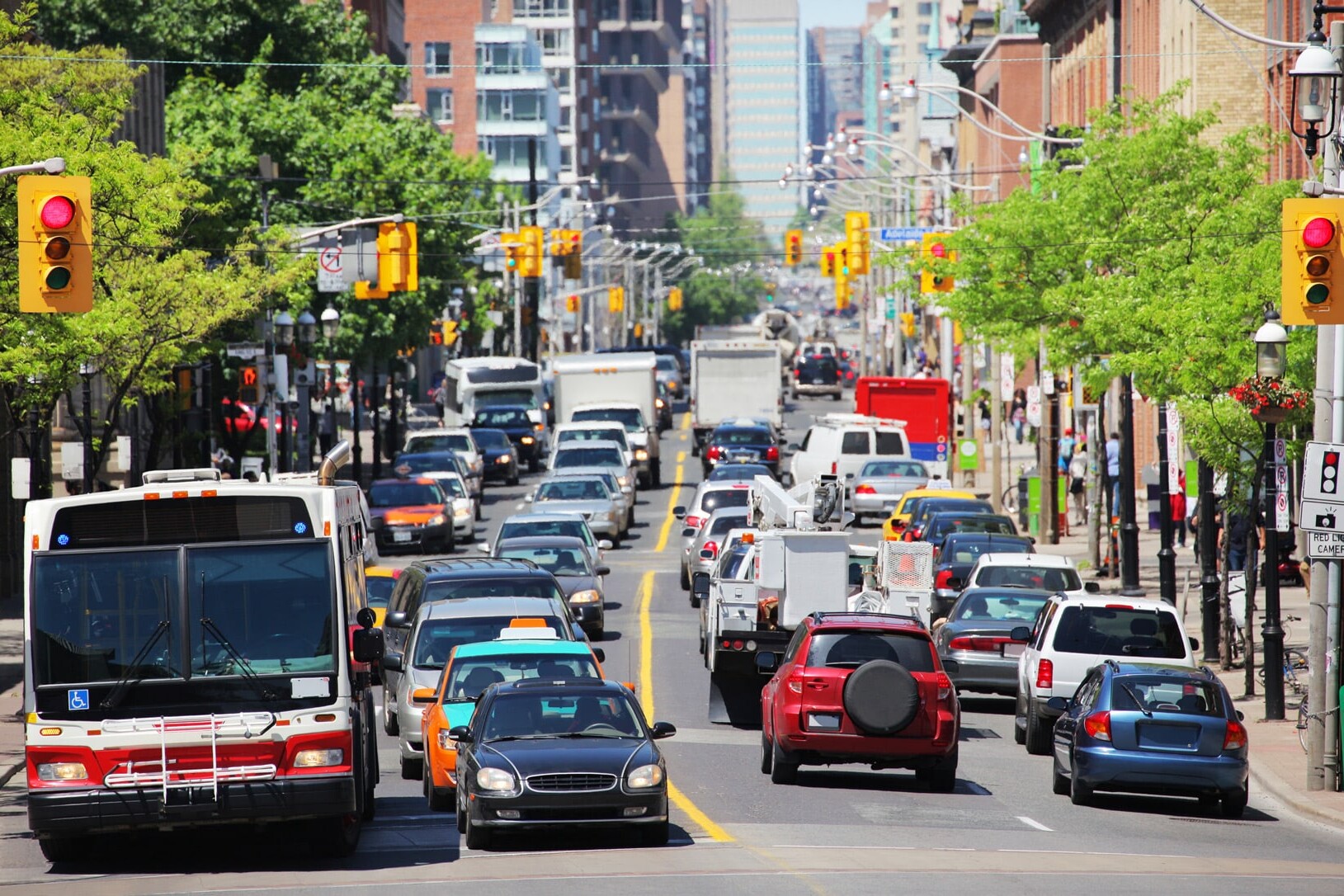
Canadians’ Satisfaction with Public Services
How satisfied are Canadians with some of the most important services that governments provide? This report tackles this question by providing an updated look at Canadian public opinion, as it is changing over time and in comparison to other countries around the world.
September 11, 2019
September 11, 2019politics,racism,democracy,discrimination,public servicesReport
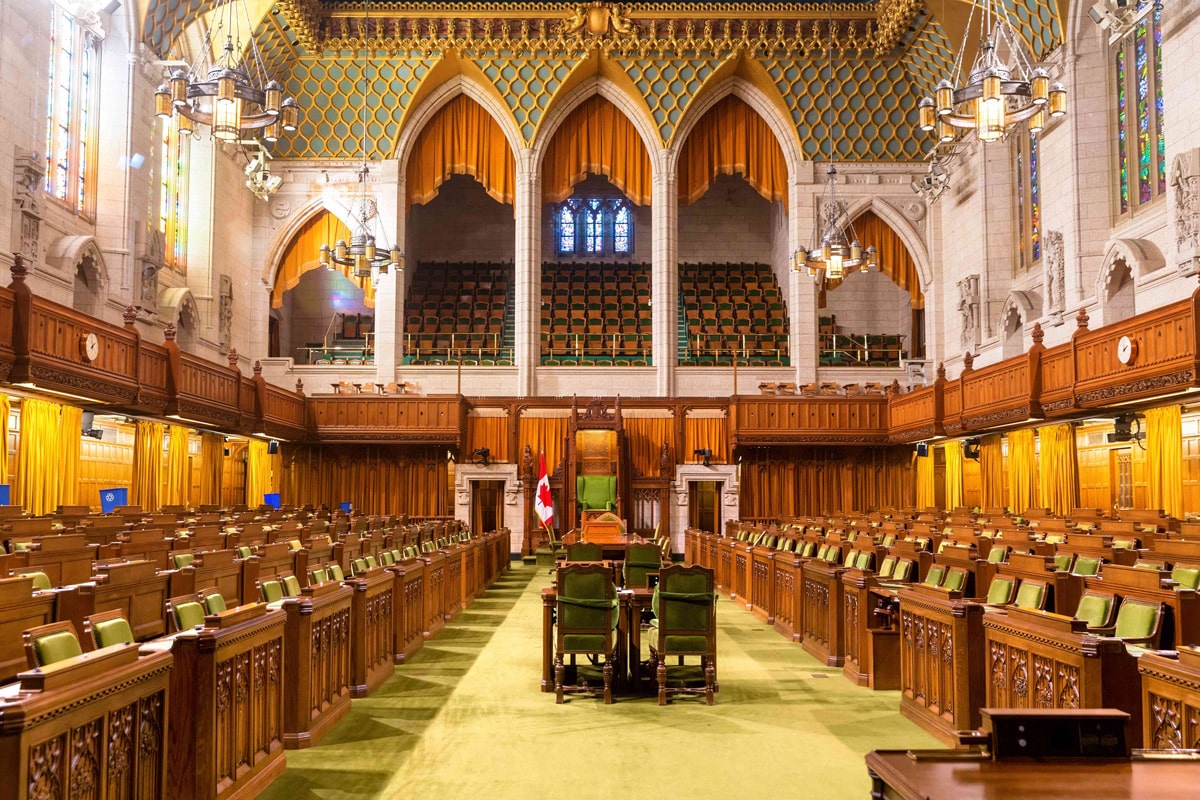
Perceptions of Gender and Political Leadership
New survey data collected by the Environics Institute suggest that one obstacle to recruiting more female candidates for public office is the difference in the degree to which men and women see themselves as qualified to run for election, and the extent of the encouragement that they receive to do so.
September 5, 2019
September 5, 2019politics,gender inequality,democracy,americasbarometerReport
Official Bilingualism at 50
Fifty years after the passage of the Official Languages Act, more than eight in ten Canadians support the policy of official bilingualism.
May 21, 2019
May 21, 2019confederation of tomorrow,federalism,politics,canadian identity,valuesReport
AmericasBarometer 2017
The AmericasBarometer is a 29 country public opinion survey on democracy, governance and civic engagement, conducted every two to three years by a consortium of of research partners across the western hemisphere.
June 30, 2017
June 30, 2017politics,social capital,government role,democracy,americasbarometer,civic engagementReport
Canadian Public Opinion on Governance and the Public Service
What does the public expect from governments, and how well do they believe their country, province and local municipality are governed?
December 31, 2014
AmericasBarometer 2014
The AmericasBarometer is a multi-country public opinion survey on democracy, governance and civic engagement, conducted every two years by a consortium of of research partners across the western hemisphere. The 2014 survey included 26 countries, encompassing 99% of the population of the Americas.
November 30, 2014
Focus Canada 2012
Focus Canada is an ongoing public opinion research program that provides a credible, independent and sustained source of Canadian public opinion data on important issues facing the country.
February 28, 2013
February 28, 2013focus canada,politics,economy,government roleReport
AmericasBarometer 2012
The public speaks on democracy and governance in Canada and across the Americas.
November 30, 2012
Focus Canada 2011
Public opinion matters – in all countries, but especially in democracies like ours. Public opinion research in the public interest makes an essential contribution to good governance and meeting societal challenges.
March 31, 2012
March 31, 2012focus canada,politics,economy,government roleReport
Focus Canada 2010
Public opinion matters – in all countries, but especially in democracies like ours. Public opinion research in the public interest makes an essential contribution to good governance and meeting societal challenges.
February 28, 2011
February 28, 2011focus canada,politics,economy,government roleReport