

The 2024 Confederation of Tomorrow survey explores public perceptions of the state of federal-provincial relations, and how these have changed over time.
The study finds that views on whether federal and provincial governments are working well together have not changed that much over the past two decades. However, compared to the early 2000s, Canadians are less likely to blame both governments equally when conflict arises, and more likely to take sides by blaming either the federal government or their provincial government.
The study identifies several other notable trends. One is the narrowing of the gap between the opinions of Quebecers and other Canadians – not because Quebecers view federalism more positively, but because views outside the province have become more negative. Another is the consistently more negative assessment of the federal system among residents of the Prairie provinces, particularly Saskatchewan and Alberta. A third is the more negative assessment among older Canadians compared to their younger counterparts. In Quebec, this pattern represents a change compared to earlier periods; while, previously, younger Quebecers held more negative views of federalism than their older counterparts, the reverse is now the case.
Survey Details
The 2024 study consists of a survey of 6,036 adults, conducted between January 13 and April 13, 2024 (82% of the responses were collected between January 17 and February 1); 94% of the responses were collected online. The remaining responses were collected by telephone from respondents living in the North or on First Nations reserves.
Funder
This project benefits from the financial support of the Research Support Program of the Secrétariat du Québec aux relations canadiennes (SQRC) / Ce projet bénéficie de l’appui financier du Programme d’appui à la recherche du Secrétariat du Québec aux relations canadiennes (SQRC).


The Confederation of Tomorrow surveys give voice to Canadians about the major issues shaping the future of the federation and their political communities. They are conducted annually by an association of the country’s leading public policy and socio-economic research organizations.
More from this Series

Related reading
Public Opinion About Canada-USA Relations
Canada and the United States have enjoyed a strong relationship for more than a century. There have been ups and downs depending on the respective leaders in each country, but underneath remained a solid foundation of trust and partnership.
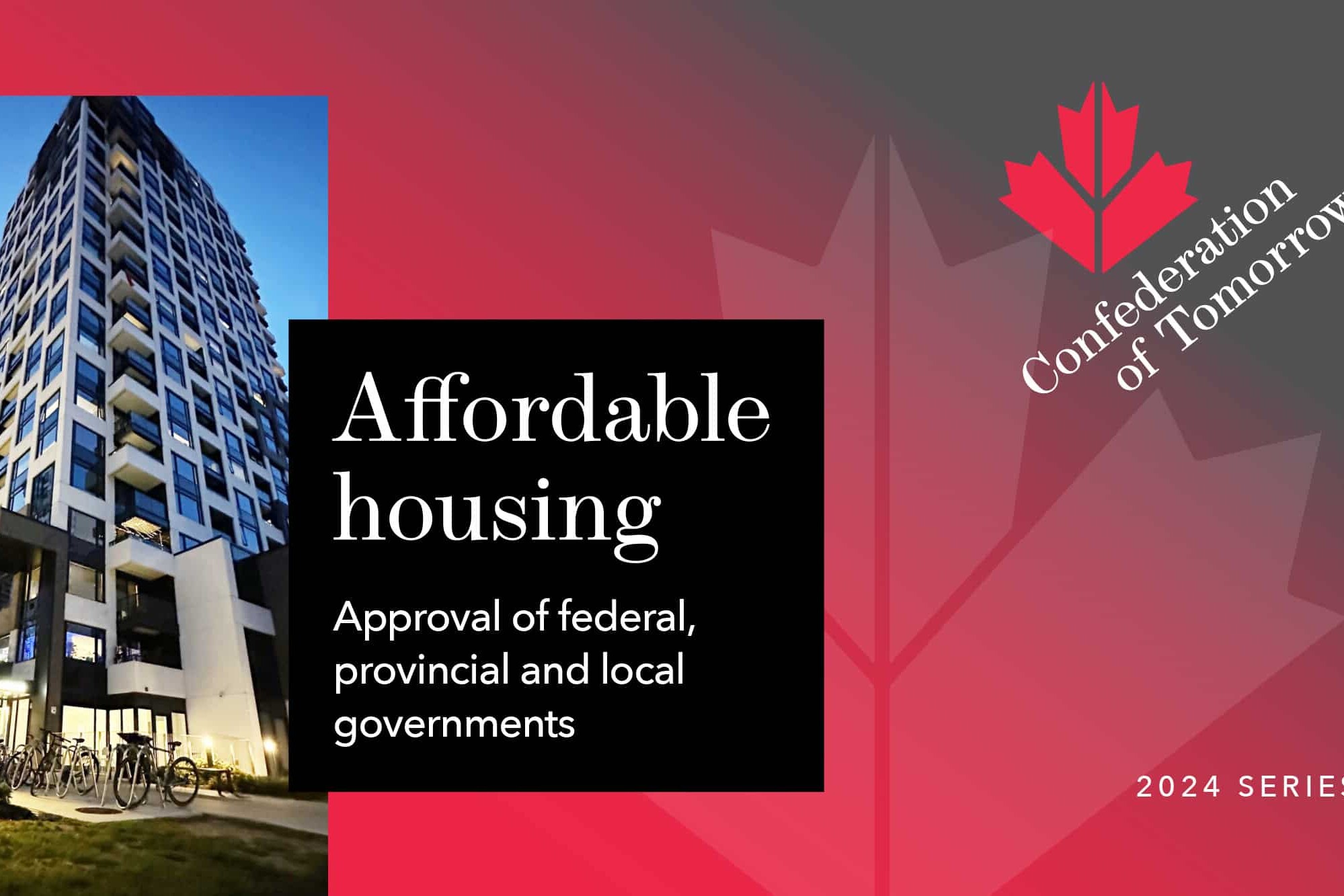
Affordable housing: approval of federal, provincial and local governments
The availability and affordability of housing has emerged as a top public policy issue. And it is one in which all governments – federal, provincial and territorial, and local – have a role to play.
Trusting federal and provincial government decision-making on key issues
Canadians are losing trust in the ability of both the federal government and their provincial governments to deal with key issues such as health care, climate change, immigration or the economy.