


Building Faster?
Most Canadians support the federal government’s intention to act quickly to expand the country’s infrastructure, but not in the absence of agreements with its provincial or Indigenous partners.
May 11, 2026
May 11, 2026Reportconfederation of tomorrow,indigenous peoples,federalism,politics
Looking for something specific?
The Atlantic Provinces in Confederation
All four Atlantic provinces have experienced significant political changes in the past year. These developments have taken place against the backdrop of additional major political change at the national and international level.
January 20, 2026
January 20, 2026confederation of tomorrow,federalism,politics,canadian identityReport
Attachment and Identity
The issues of Canadian identity and unity came to the fore in the first few months of 2025, in the face of the threatening policies and pronouncements of returning U.S. president Donald Trump.
June 26, 2025
June 26, 2025confederation of tomorrow,federalism,politics,canadian identityReport

Pride in Being Canadian
Previous Focus Canada surveys have documented a decline in the proportion of Canadians who are proud of being a Canadian. But in the wake of the developments since the return of U.S. President Donald Trump to the White House, has there been a resurgence of national pride in Canada?
June 12, 2025
June 12, 2025focus canada,politics,canadian identity,valuesReport
Attachment and identity in the Canadian federation
The annual Confederation of Tomorrow surveys explore the relationships between different types of identity. It asks about attachment to and identification with Canada and one’s province or territory; it also asks Indigenous Peoples about their attachment to their Indigenous nation or community.
June 30, 2024
June 30, 2024confederation of tomorrow,indigenous peoples,federalism,canadian identityReport

Reconciliation and Relations with Indigenous Peoples
How do Canadians today see relations between Indigenous and non-Indigenous people and how the process of reconciliation unfolding? Confederation of Tomorrow surveys have been addressing this topic since 2019, and the 2024 survey provides a fresh update on public attitudes from both Indigenous and non-Indigenous perspectives, and how they have evolved over time.
June 20, 2024
June 20, 2024confederation of tomorrow,indigenous peoples,politics,canadian identity,canadian politicsReport
Support for bilingualism and learning a second language
The 2024 Confederation of Tomorrow survey revisits the topic of official bilingualism and the importance of children learning to speak a second language. It finds that support for bilingualism as a policy, and interest in children learning a second language, both remain fairly high.
May 30, 2024
May 30, 2024immigration,confederation of tomorrow,indigenous peoples,canadian identityReport
The Perspectives of Second-generation Immigrants in Canada
Outcomes for second-generation immigrants are typically measured in terms of educational attainment, employment rates and income. These indicators are important, but they tell us little about the experience that second-generation have balancing the values and expectations of their immigrant parents with those of Canadian society more generally.
March 7, 2024
March 7, 2024immigration,multiculturalism,canadian identity,economy,millennials & genzReport

Yukon @ 125!
The Yukon came into existence as a separate territory on June 13, 1898. To mark the occasion, the Confederation of Tomorrow survey looks at how Yukoners’ opinions differ from those of other Canadians.
June 12, 2023
June 12, 2023confederation of tomorrow,federalism,canadian identity,valuesReport,Infographic

Religion, Rights and the Role of the Courts
Last year marked the 40th anniversary of the Canadian Charter of Rights and Freedoms. While the Charter as a whole remains popular, the occasional use by governments of its provision allowing them to override certain Charter rights (Section 33) continues to spark controversy.
May 29, 2023
May 29, 2023confederation of tomorrow,federalism,politics,canadian identity,values,religionReport
Support for equalization: 2023 update
Key findings are: Overall support for the equalization program in Canada remains steady; Support has increased in Alberta since 2019; Support remains steady in non-recipient provinces, but has fallen by 8 points since 2019 in recipient provinces. A 29-point gap between levels of support in Quebec and Alberta has narrowed to a 6-point gap.
April 26, 2023
April 26, 2023confederation of tomorrow,federalism,politics,canadian identity,economy,valuesReport

The Evolution of the Canadian Identity
The Canadian identity is in constant evolution, in response to changing political forces and cultural influences. One of the more important potential sources of change in recent years is the growing ethno-cultural diversity of the population, driven by immigration and, in particular, by the growing number of immigrants arriving from Asian and Africa.
December 23, 2022
December 23, 2022focus canada,canadian identity,valuesReport
Syrian Refugee Lived Experience Project
In 2015, through an unprecedented national mobilization of government, the settlement sector and Canadian citizens, the country opened its doors to accept refugees fleeing the humanitarian crisis in Syria, resettling close to 40,000 refugees within the space of a year. How have these refugees fared in their new country and lives, and what can be learned from their experience that might benefit future refugees?
December 17, 2022
December 17, 2022immigration,multiculturalism,canadian identity,values,syria,lived experience,syrian refugee lived experience projectReport

Satisfaction, Outlook and Opportunities
The survey finds that younger Canadians have grown more dissatisfied with the way things are going in the country, and more pessimistic about prospects for the next generation.
December 16, 2022
December 16, 2022focus canada,politics,canadian identity,economy,COVID-19,democracyReport
Public Opinion in Canada and the United States
The diminishing concern about the impact of free trade on Canada’s cultural identity coincides with some sharp differences of opinion between Canadians and Americans on prominent social issues.
December 9, 2022
December 9, 2022focus canada,politics,canadian identity,racism,government role,democracy,discriminationReport
Canadian Youth
A new national research project documents for the first time the social norms that govern how Canadians think about and act on different types of racial micro-aggressive actions directed at people who are Indigenous or Black.
March 31, 2022
March 31, 2022canadian identity,social values,values,youth,millennials & genz,civic engagementReport
Attachment and Advantages
The mid-point of each calendar year offers an ideal opportunity for Canadians to reflect on issues related to national identity.
July 8, 2021
July 8, 2021confederation of tomorrow,federalism,canadian identity,united statesReport

Private Refugee Sponsorship in Canada
Given the high profile that refugee resettlement received over the past five or so years, it is not surprising that there is widespread public awareness.
June 17, 2021
June 17, 2021immigration,multiculturalism,canadian identity,values,government role,civic engagementReport

A Better Canada: Community, Citizenship and Engagement
The events of 2020 have disrupted every aspect of Canadians’ daily lives. What is less clear is the extent to which they have also changed their longer-term outlook.
December 18, 2020
December 18, 2020canadian identity,values,social change,civic engagementReport
Identity, Values and Language
The third report explores issues relating to identity, values and language.
October 29, 2020
October 29, 2020confederation of tomorrow,federalism,canadian identity,values,social change,religionReport
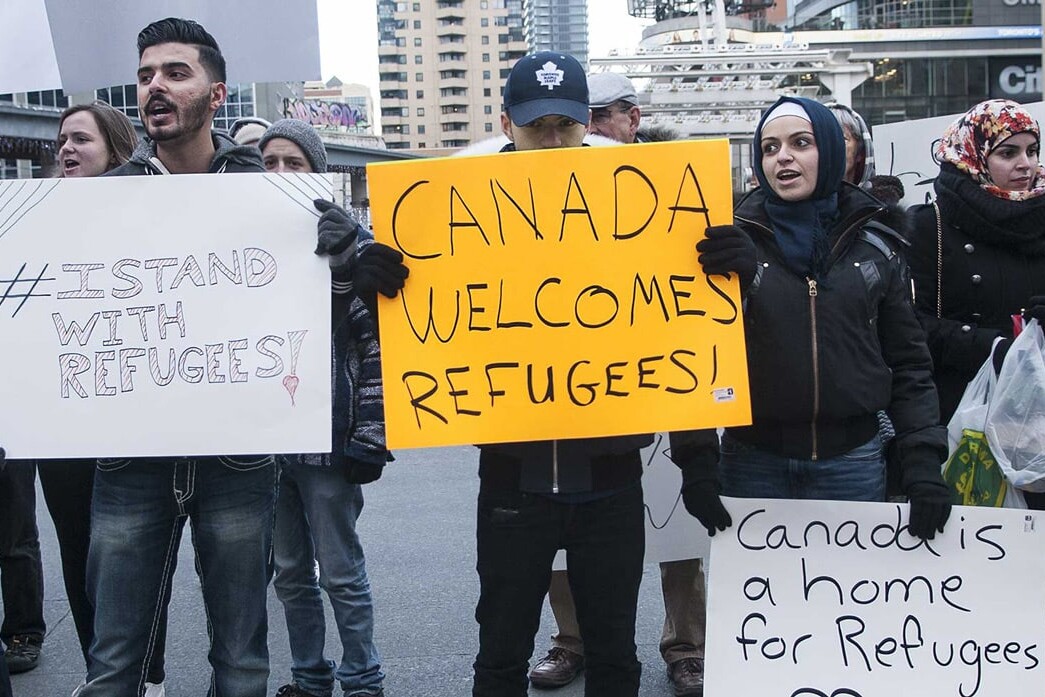
Canadian public opinion on immigration and refugees
The 43rd Canadian Federal Election just concluded was a tightly-contested campaign in which the incumbent Liberal Government led by Justin Trudeau found itself in a tough fight for reelection just a few years after it took office on a promise of “sunny ways” and broad political support.
November 5, 2019
November 5, 2019immigration,focus canada,canadian identity,racism,values,discriminationReport

Public Opinion in Metropolitan Canada
This report examines public opinion on a range of issues in Canada’s four largest metropolitan areas – Montreal, Toronto, Calgary-Edmonton (combined) and Vancouver – areas that together hold 43 percent of the country’s total population.
October 16, 2019
October 16, 2019confederation of tomorrow,federalism,politics,canadian identity,valuesReport
Official Bilingualism at 50
Fifty years after the passage of the Official Languages Act, more than eight in ten Canadians support the policy of official bilingualism.
May 21, 2019
May 21, 2019confederation of tomorrow,federalism,politics,canadian identity,valuesReport
Canada: Pulling Together or Drifting Apart?
This report looks at Canadians' identity within the country, and how they see their province or territory's place in the federation.
March 21, 2019
March 21, 2019confederation of tomorrow,federalism,canadian identity,valuesReport
Making Federalism Work
This report focuses on the ways in which the country’s federal, provincial and territorial governments should work together as federal partners to address key issues.
March 21, 2019
March 21, 2019confederation of tomorrow,federalism,canadian identity,valuesReport
Canada’s World Survey 2018
The survey was the first to ever ask Canadians about how they see their place in the world, and that of their country – not simply what they believe their governments should be doing: What do they see as the top global issues, and how do they orient personally to the world outside of the national borders, in terms of their interests, travel and personal connections?
April 16, 2018
April 16, 2018canadian identity,values,foreign affairsReport

2016 Survey on Immigration and Citizenship
Migration levels are now at an all-time high worldwide, due in large part to massive numbers of refugees fleeing conflict in such countries as Syria and Iraq. Many are seeking a safe refuge in European countries, where governments are implementing new border controls, and the number of attacks against immigrants is on the rise.
October 31, 2016
October 31, 2016immigration,multiculturalism,focus canada,canadian identity,valuesReport

2015 Survey on Immigration and Multiculturalism
The last few years have not been good ones for immigrants and multicultural diversity – worldwide or in Canada. At the global level, the flow of migrants is now higher than at any time in human history.
June 30, 2015
June 30, 2015immigration,multiculturalism,focus canada,canadian identity,racism,values,discriminationReport

Canadians on Hockey 2012
Hockey has long held a central place in Canada, and the National Hockey League is the flagship arena for the sport. Professional hockey has long stood out for the aggressive style of play, which has largely been accepted as just a part of the game.
May 31, 2012
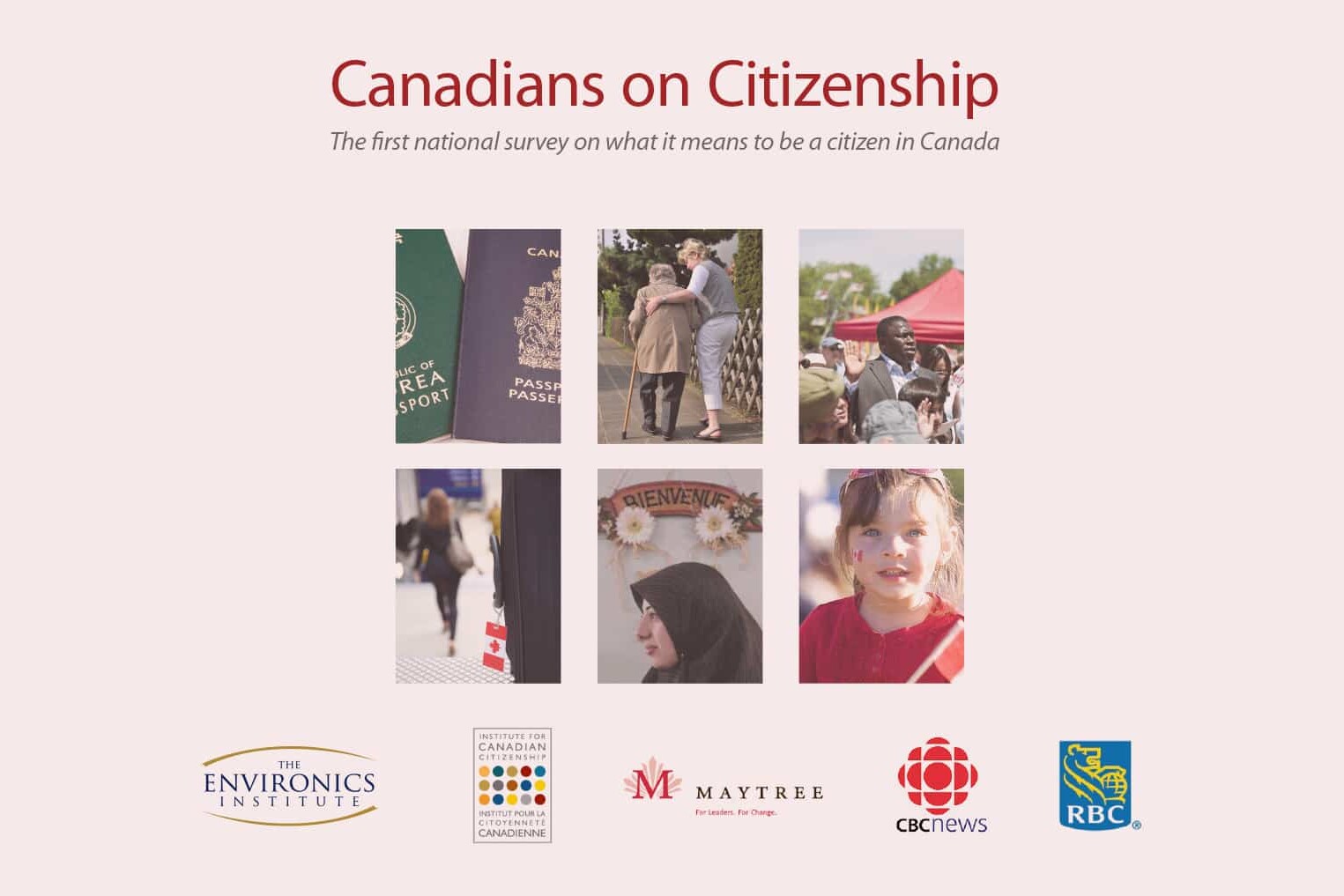
Canadians on Citizenship
Canada’s history is one of successive waves of people arriving on its shores, each having to find their place among those who preceded them.
February 7, 2012
February 7, 2012canadian identity,values,democracy,civic engagementReport