

Public Opinion About Canada-USA Relations
Canada and the United States have enjoyed a strong relationship for more than a century. There have been ups and downs depending on the respective leaders in each country, but underneath remained a solid foundation of trust and partnership.

Canadians worry about impact of trade wars as pessimism about economy deepens
Concerns about the impact of U.S. tariffs are contributing to a growing pessimism among Canadians about the economy, employment and their own financial situation.

Strong Schools, Stronger Future: What Canadians Expect from Public Education
To explore how Canadians view public education, the latest wave of the Survey on Employment and Skills asked Canadians two questions about schools in their communities. The first addressed the objectives that schools should have, and the second assessed school performance.
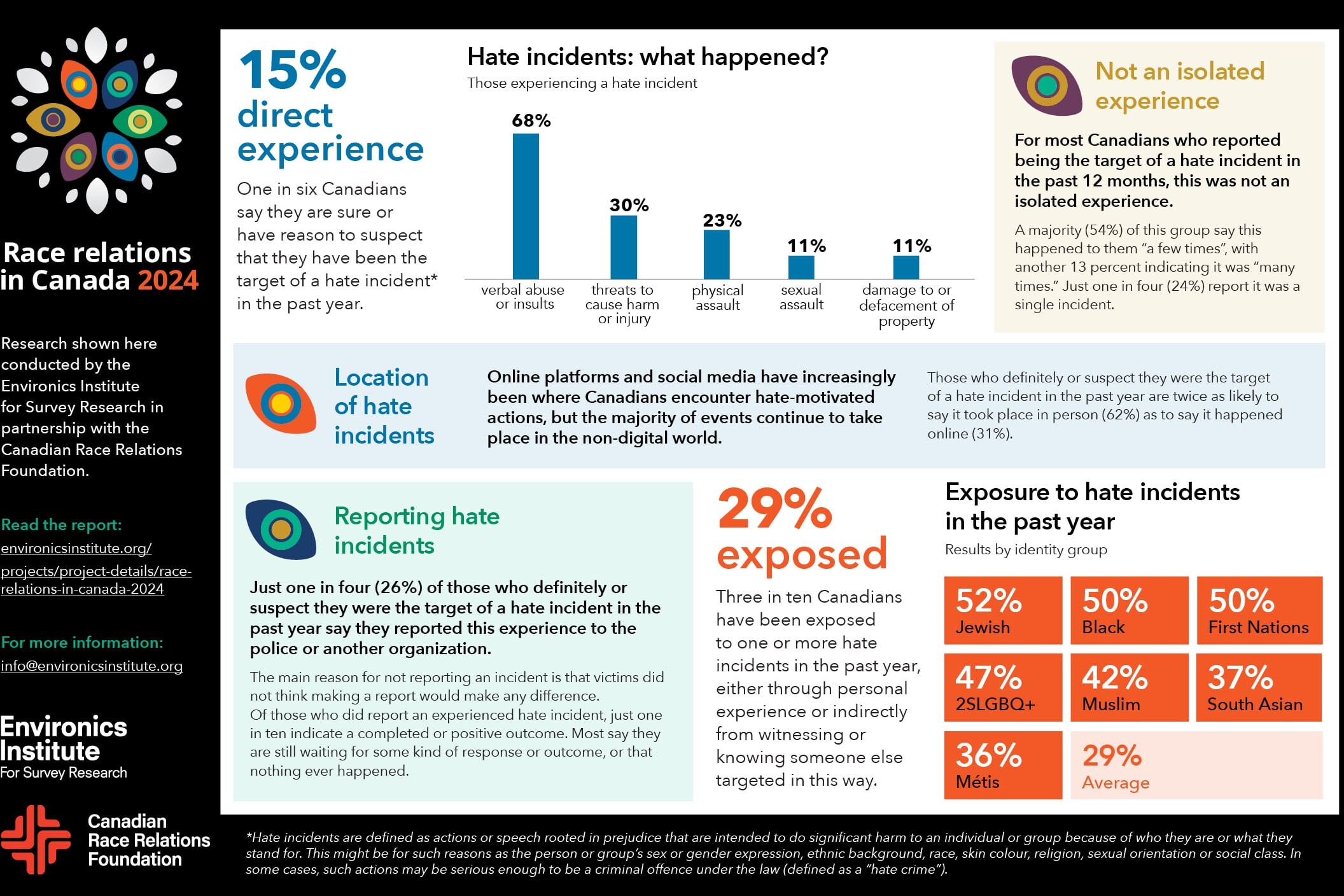
One in six Canadians say they have definitely or possibly been the target of a hate incident in the past year
The Race Relations in Canada 2024 Survey is the most comprehensive national survey to date focusing on Canadians’ experience with hate, a rapidly spreading form of anti-social aggressive racism directed at people, most commonly because of their race, ethnicity or religion.
Race Relations in Canada 2024
The research consisted of a main survey conducted online between February 12 and March 13, 2024 with 4,470 Canadians (ages 18+), and a supplementary survey conducted online between November 18 and 25, 2024 with 616 Canadians who identify as Jewish (by religion, ethnicity and/or culture).
Perspectives on Growing Older in Canada: The 2024 NIA Ageing in Canada Survey
The NIA Ageing in Canada Survey is a decade-long annual research program designed to capture Canadians’ experiences, perspectives and expectations on ageing.

How working from home is affecting the workplace
Exploring how the shift to working from home is affecting job satisfaction, productivity, teamwork, and equity and inclusion is an important step in assessing the current state of the workplace in Canada.
Inter-generational Mobility in Canada
The 2024 survey finds that the proportions of Canadians who feel financially worse off today than their parents were at their age, and who feel that the next generation will be worse off than they are, are both trending upwards.
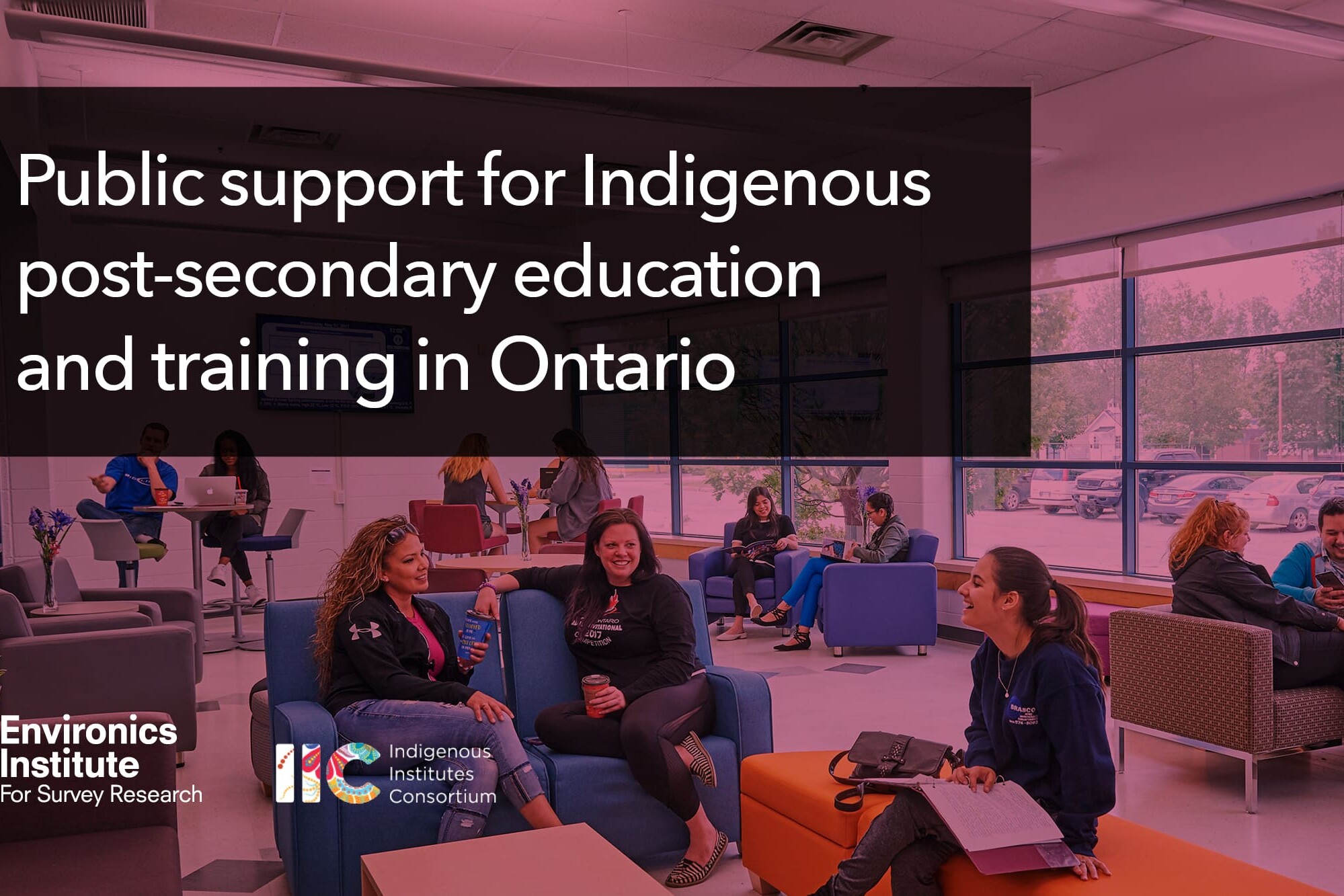
Public support for Indigenous post-secondary education and training in Ontario
The Calls to Action issued in 2015 by the Truth and Reconciliation Commission of Canada included a number of items relating to education. These included calls for measures to eliminate gaps in educational attainment between Indigenous Peoples and non-Indigenous people in Canada, to provide adequate and equitable funding of education for Indigenous students, and to develop culturally appropriate educational curricula.
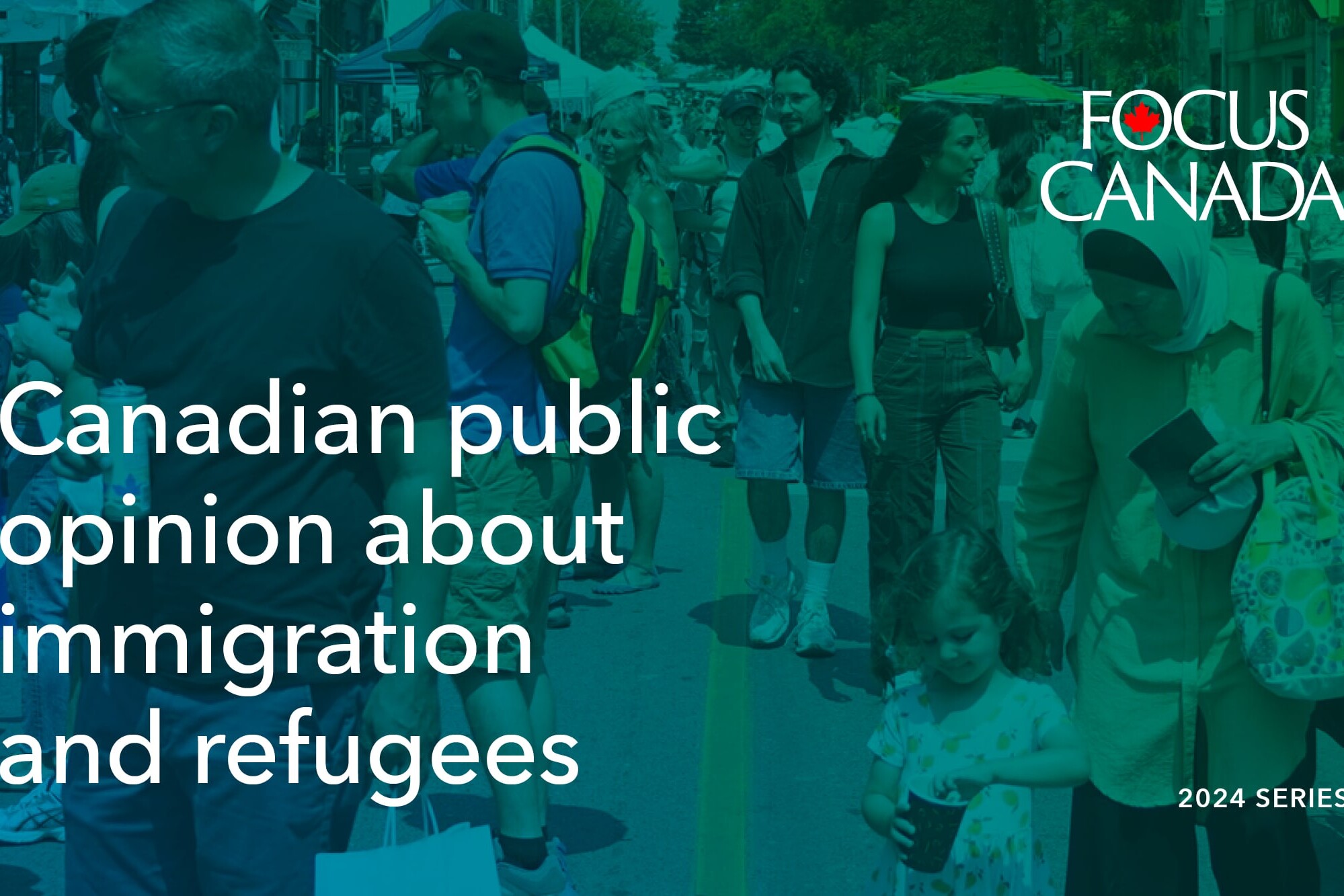
Canadian public opinion about immigration and refugees 2024
For the first time in a quarter century, a clear majority of Canadians say there is too much immigration, with this view strengthening considerably for the second consecutive year.