


The door to reconciliation is truly open
Indigenous issues in Canada have been prominent in the news over the past few years. The Idle No More movement, the Truth and Reconciliation Commission (TRC), and the Trudeau government's initiation of a public inquiry into missing and murdered indigenous women have each helped to bring mainstream attention to long-standing concerns of First Nations, Métis, and Inuit peoples.

Distinct societies: Why Canada, US diverge on Syrian refugees
Two-thirds of Canadians (65%) support the Liberal government’s promise to bring 25,000 Syrian refugees to Canada, according to a recent Nanos survey. About a third (34%) oppose the move either strongly or somewhat.
Are Canadians on-side with Trudeau in fighting climate change?
The 42nd federal election is now over, and the deconstruction of what it was really about will go on for some time. What is already clear is that the outcome was driven primarily by a growing desire for change after almost a decade of Conservative government.

The deciding factor in this election was Canadian values
US Democratic Party strategist James Carville famously coined the phrase "It’s the economy, stupid" as the theme of Bill Clinton's successful 1992 presidential campaign.

Listening In: What recent populist victories tell us about Canada
Societies have conversations with themselves. Sometimes these conversations are so noisy that everyone is forced to pay attention. In Canada, our noisiest conversations since World War II have been Quebec sovereignty and the War Measures Act.

We support the war (for now)
Recent surveys have found Canadians to be supportive of Canada’s military deployment to Iraq and Syria to aid in the fight against ISIS.

Three ways Liberals and NDP can win over Conservative voters
As this year’s federal election approaches, the Conservative government is increasingly crystallizing its offer to voters around a single promise: security. The economy has been removed from the party’s display window, replaced by the global fight against ISIS and its sympathizers, some abroad, some next door.
2015 Canadian Public Opinion on Climate Change
As part of its ongoing Focus Canada public opinion research program, the Environics Institute partnered with the David Suzuki Foundation to ask Canadians about climate change, to determine how perceptions have changed (or not) over the past year or so.
Counterpoint – Harper has not shifted Canadians’ opinions
What has Stephen Harper done to Canada? To some, that‟s a rueful, rhetorical question. To them it‟s obvious: this government has changed the country drastically and for the worse.
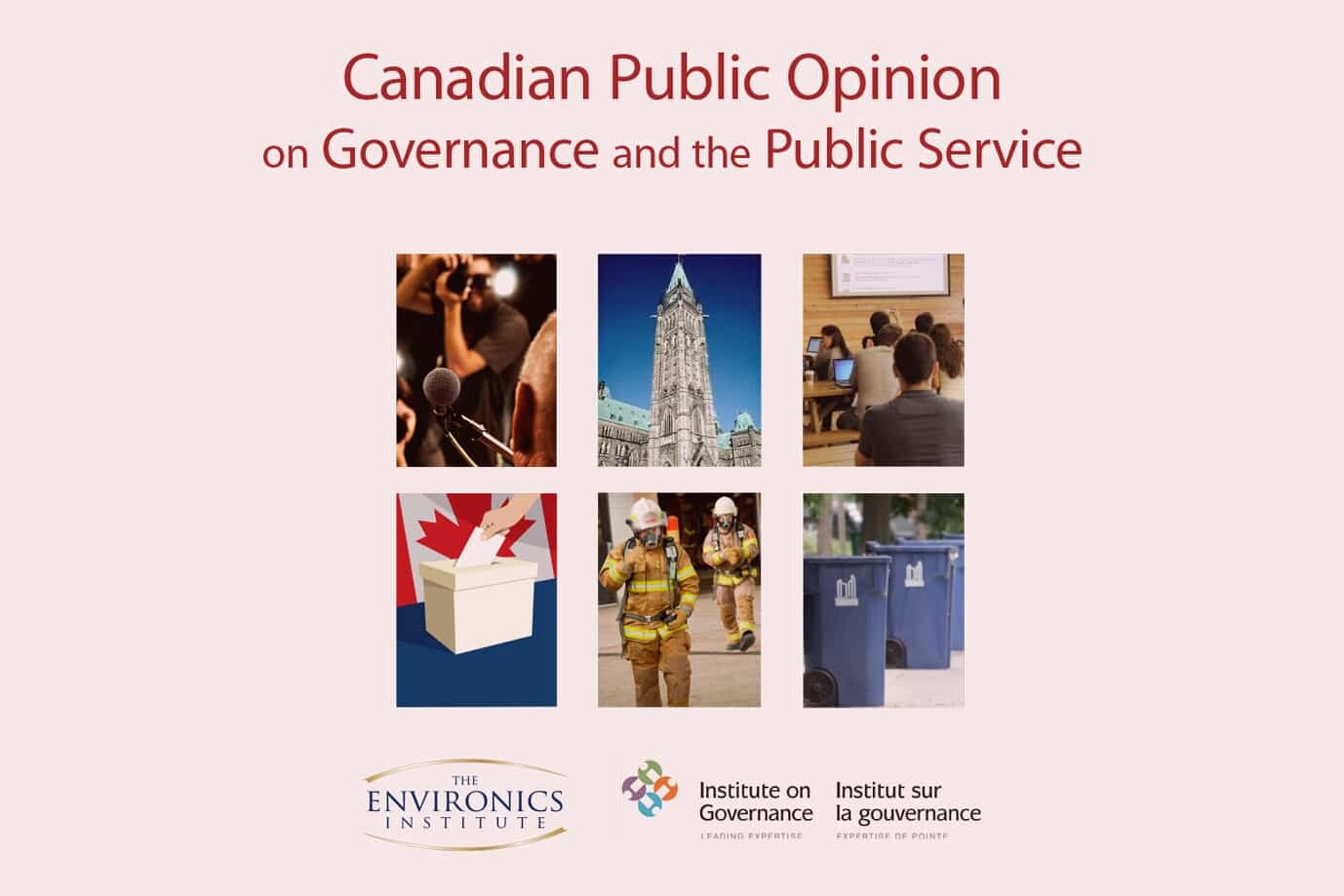
Canadian Public Opinion on Governance and the Public Service
What does the public expect from governments, and how well do they believe their country, province and local municipality are governed?