


By Michael Adams. Published in The Globe and Mail. December 9, 2015.
Two-thirds of Canadians (65%) support the Liberal government’s promise to bring 25,000 Syrian refugees to Canada, according to a recent Nanos survey. About a third (34%) oppose the move either strongly or somewhat.
Attitudes in the U.S., meanwhile, are starkly different. According to a survey published by Bloomberg in mid-November, just 28 percent of Americans support the Obama administration’s plan to accept 10,000 Syrian refugees. An additional 11% would support the plan if the refugees were screened by religion, with Christians accepted and Muslims excluded. This survey was fielded before the recent mass shooting in California, which some politicians and pundits have linked to the Syrian refugee issue (although the perpetrators were neither refugees nor of Syrian origin).
Both Canada and the United States are largely populated by immigrants and the descendants of immigrants. Refugees have been a small part of the migration mix in both countries. It is striking that Americans, ten times as numerous as Canadians, should be largely opposed to taking in just 40 percent of the number of refugees Canada is accepting.
At the level of political leadership, Justin Trudeau’s posture of openness and globalism has been a political asset. Most Canadians like his humane stance on refugees almost as much as they like his diverse cabinet, some members of which are the talented offspring of people who fled to this country from strife elsewhere.
President Obama favours humane global citizenship (and is himself the talented offspring of a foreign-born parent drawn to America by first-class education) but the people he governs are not so sure at the moment. Would-be Republican nominee Donald Trump’s proposals to require American Muslims to carry special identification cards and, more recently, to bar any additional Muslims from entering the U.S.—ominous ideas to anyone with a cursory knowledge of the 20th century’s more infamous regimes—have conspicuously failed to end his political career.
There are probably some Canadians who like Trump and there are certainly Americans who like Trudeau. But ultimately the two countries have very different centres of political gravity. Each place has been shaped by its own history, institutions, economics, and demography. Each place has socio-cultural values that shape and are shaped by public policy. Canadians have traditionally been more accepting of collectivity, balancing individual goods like personal freedom with collective goods like fairness and equality of opportunity. Individual liberty alone is the dominant American ideal, their means of pursuing happiness.
Today, Canada has its troubles but is also reaping some benefits of past policy decisions (such as public investments in health and education) that have resulted in greater life expectancy, less income inequality, more social mobility, and a generally greater sense of wellbeing, trust, and security. We certainly do not live under the threat that a mass shooting that will happen somewhere, to some unlucky group of us, hundreds of times each year (although we, like many other countries, have had such dreadful experiences, even in peaceable Montreal).
Americans certainly enjoy unique latitude in the individual pursuit of happiness, but the pursuit of happiness doesn’t always look like much fun. In an environment where there is a lot to fear (financial ruin in an unforgiving system, illness leading to bankruptcy, gun violence inflicted by a stranger, a family member, or an unsupervised toddler), it is perhaps not surprising that some are eager to control the one variable that seems like a no-brainer: don’t give jihadists a Green Card. But one of the San Bernardino jihadis seems to have been born in Chicago. The “big and beautiful wall” Donald Trump proposed to build to keep dangerous people out of America would require complex architecture indeed. No society is or can be perfectly safe. But societies that have traditionally put a little more stock in collective wellbeing seem to have better odds. To be fair, those safer, quieter places have also not been the birthplaces of Apple, Google, Tesla, Amazon, Wikipedia, and the first human heart transplant.
As I have written elsewhere, despite the current apparent spasm of xenophobic sentiment and the din of gun violence, our values research suggests that in fact Americans’ values are tilting in a slightly more Canadian direction—toward greater openness to social difference, a more nuanced sense of personal autonomy, and even a less suspicious attitude toward government. The shift is by no means a sea change, but the election of President Obama (twice) was indeed the product of deep and meaningful changes in the electorate, no matter how lonely he may sometimes appear in White House press briefings these days. As younger voters, women (especially single women), and America’s diverse, city-dwelling voters become more influential politically, America is changing. But those who are on average less keen on this direction of social change (older, more conservative, whiter, more religious and patriarchal voters) have some innings left, as the tremendous polarization of U.S. political discourse attests.
What will become of America in the next election cycle and beyond? And how will the noisy debates and decisions of our neighbour to the south influence our own public conversations and political aspirations? As we wait to welcome 25,000 Syrian refugees, Canada feels like a fairly peaceable corner of a turbulent world. Recent reports suggest, however, that of the more than 25,000 refugees interviewed by the UN, fewer than 2,000 were interested in coming to Canada. Many are likely hoping for reunification with family members in Europe. It would be interesting to know how many are holding out for their shot at the American Dream.
Related reading
Don’t overlook the role that schools and teachers play in welcoming refugees to Canada
A series of attacks in Toronto — many occurring within the public transit system — has shone the spotlight on the issue of crime and safety in the city. As we search for solutions, we should start by thinking about who among us feels more vulnerable.
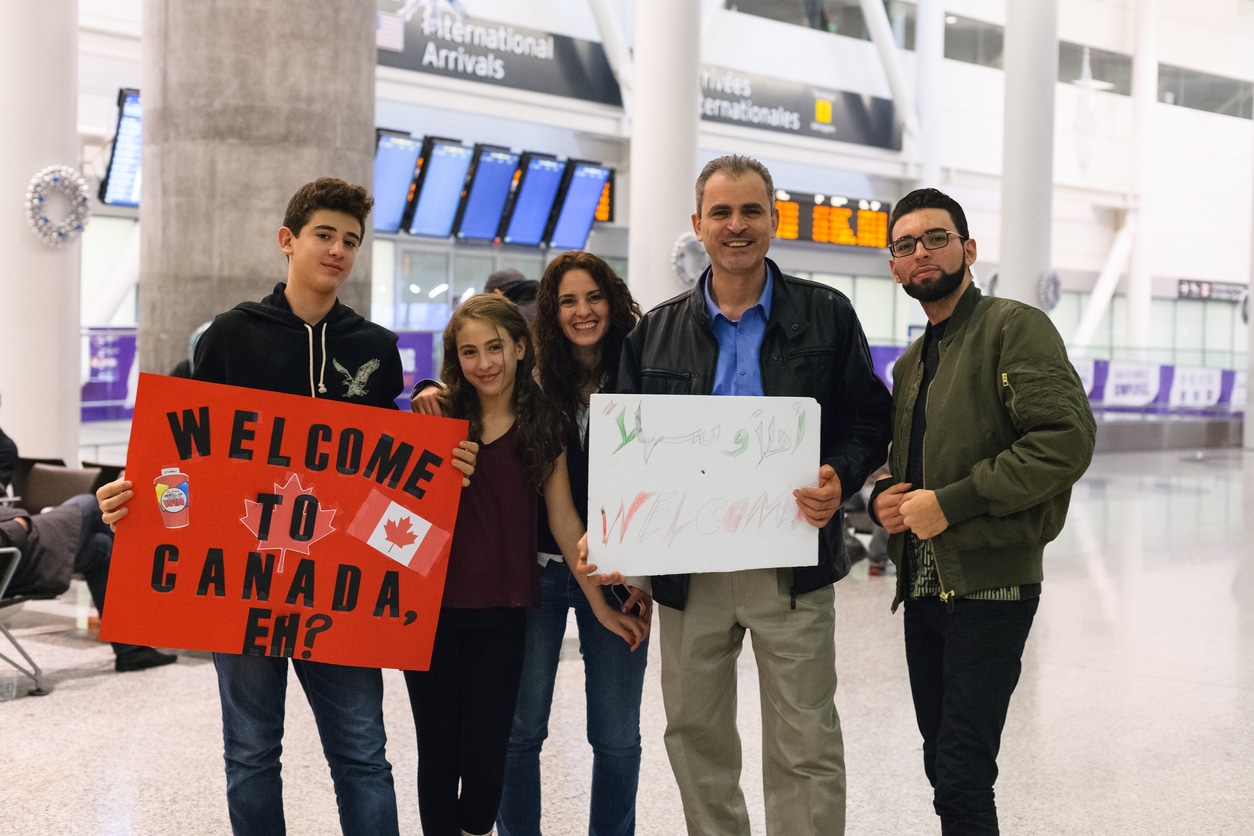
Canada must continue to modelling its refugee efforts on its response to the Syrian crisis
The arrival of Syrian refugees in Canada a few years ago is a well-known “feel-good” story. Images of Justin Trudeau greeting refugees at the airport and private citizens stepping up as sponsors are etched in the minds of many Canadians.

January 30, 2023immigration,multiculturalism,refugees,Insight,syriamichael adams
Perspectives on Growing Older in Canada: The 2024 NIA Ageing in Canada Survey
The NIA Ageing in Canada Survey is a decade-long annual research program designed to capture Canadians’ experiences, perspectives and expectations on ageing.
January 28, 2025Reportageing,health,ageing in canada surveys


