


Building Faster?
Most Canadians support the federal government’s intention to act quickly to expand the country’s infrastructure, but not in the absence of agreements with its provincial or Indigenous partners.
May 11, 2026
May 11, 2026Reportconfederation of tomorrow,indigenous peoples,federalism,politics
Looking for something specific?
The Atlantic Provinces in Confederation
All four Atlantic provinces have experienced significant political changes in the past year. These developments have taken place against the backdrop of additional major political change at the national and international level.
January 20, 2026
January 20, 2026confederation of tomorrow,federalism,politics,canadian identityReport
Respect and influence in the Canadian federation
Every year since 2019, the Confederation of Tomorrow survey has been asking Canadians the following three questions about respect, influence and spending in the federation.
December 18, 2025
December 18, 2025confederation of tomorrow,federalism,politicsReport
Climate Policy in the Federation
Public concerns about climate change notwithstanding, Canadians are placing increasing priority on economic security over the importance of reducing carbon emissions.
September 21, 2025
September 21, 2025confederation of tomorrow,environment,federalism,politics,climate changeReport
The Prairies and B.C. in Confederation
This report draws on the most recent Confederation of Tomorrow survey to present an updated picture of how Western Canadians view their province’s place in the federation. The survey finds that, rather than growing, levels of dissatisfaction in the three Prairie provinces with how federalism works in Canada declined between 2024 and 2025.
August 20, 2025
August 20, 2025confederation of tomorrow,federalism,politicsReport
Working together in the Canadian federation
Two main political events since the start of this year have affected the context in which the relations between governments in Canada are evolving. First, the imposition of U.S. tariffs, combined with the American president’s threats against Canada’s independence, have created a new sense of urgency.
July 20, 2025
July 20, 2025confederation of tomorrow,federalism,politics,government roleReport

Attachment and Identity
The issues of Canadian identity and unity came to the fore in the first few months of 2025, in the face of the threatening policies and pronouncements of returning U.S. president Donald Trump.
June 26, 2025
June 26, 2025confederation of tomorrow,federalism,politics,canadian identityReport
Attachment and identity in the Canadian federation
The annual Confederation of Tomorrow surveys explore the relationships between different types of identity. It asks about attachment to and identification with Canada and one’s province or territory; it also asks Indigenous Peoples about their attachment to their Indigenous nation or community.
June 30, 2024
June 30, 2024confederation of tomorrow,indigenous peoples,federalism,canadian identityReport
Federal-provincial relations: public perceptions
The study finds that views on whether federal and provincial governments are working well together have not changed that much over the past two decades. However, compared to the early 2000s, Canadians are less likely to blame both governments equally when conflict arises, and more likely to take sides by blaming either the federal government or their provincial government.
June 6, 2024
June 6, 2024confederation of tomorrow,federalism,politics,canadian politics,democracyReport
Addressing climate change in the Canadian federation
Canadians are evenly divided on the relative priority that should be given to protecting the environment versus protecting jobs. The emphasis placed on environmental protection has declined since 2023 across the population.
May 10, 2024
May 10, 2024confederation of tomorrow,environment,federalism,economy,government role,democracyReport
Trusting federal and provincial government decision-making on key issues
Canadians are losing trust in the ability of both the federal government and their provincial governments to deal with key issues such as health care, climate change, immigration or the economy.
April 17, 2024
April 17, 2024confederation of tomorrow,federalism,politics,democracyReport

Spotlight on Atlantic Canada
The outlook in Atlantic Canada has changed significantly over the past two years. In 2021, almost a year into the COVID-19 pandemic, people in the region stood out from other Canadians as being much more satisfied with the direction of the country in general, and with the way both the federal government and their provincial governments had managed the crisis so far.
July 11, 2023
July 11, 2023confederation of tomorrow,federalism,politics,gender inequality,healthReport

Yukon @ 125!
The Yukon came into existence as a separate territory on June 13, 1898. To mark the occasion, the Confederation of Tomorrow survey looks at how Yukoners’ opinions differ from those of other Canadians.
June 12, 2023
June 12, 2023confederation of tomorrow,federalism,canadian identity,valuesReport,Infographic
Religion, Rights and the Role of the Courts
Last year marked the 40th anniversary of the Canadian Charter of Rights and Freedoms. While the Charter as a whole remains popular, the occasional use by governments of its provision allowing them to override certain Charter rights (Section 33) continues to spark controversy.
May 29, 2023
May 29, 2023confederation of tomorrow,federalism,politics,canadian identity,values,religionReport
Support for equalization: 2023 update
Key findings are: Overall support for the equalization program in Canada remains steady; Support has increased in Alberta since 2019; Support remains steady in non-recipient provinces, but has fallen by 8 points since 2019 in recipient provinces. A 29-point gap between levels of support in Quebec and Alberta has narrowed to a 6-point gap.
April 26, 2023
April 26, 2023confederation of tomorrow,federalism,politics,canadian identity,economy,valuesReport

Spotlight on Alberta
In Alberta, the level of discontent with the federation remains high, but has been declining gradually since 2019. This overall change, however, masks two distinct trends. On the one hand, those who support the provincial government continue to express high levels of dissatisfaction with federalism.
April 5, 2023
April 5, 2023confederation of tomorrow,federalism,politicsReport
Respect, Influence and Fairness in the Canadian Federation
Did the federal, provincial and territorial responses to the crisis alleviate or exacerbate public discontent with how federalism works in Canada?
September 27, 2021
September 27, 2021confederation of tomorrow,federalism,politics,government roleReport
Attachment and Advantages
The mid-point of each calendar year offers an ideal opportunity for Canadians to reflect on issues related to national identity.
July 8, 2021
July 8, 2021confederation of tomorrow,federalism,canadian identity,united statesReport
Addressing climate change in the Canadian federation
Prior to the onset of the COVID-19 pandemic, climate change had emerged as one of Canadians’ top concerns. The situation a year later is completely different: naturally, the pandemic now eclipses all other issues as the one Canadians see as most important.
June 18, 2021
June 18, 2021confederation of tomorrow,environment,federalism,politics,climate changeReport
The Role of Governments and the Division of Powers
The COVID-19 pandemic has presented governments in Canada with enormous challenges. While the current priority remains stemming the spread of the virus and accelerating the pace of vaccinations, governments are also looking ahead to the measures needed to shape an economic recovery.
April 19, 2021
April 19, 2021confederation of tomorrow,federalism,government roleReport

All in this Together?
A year into the COVID-19 pandemic, efforts to limit the spread of the virus continue to depend in large part on the willingness of citizens to modify their behaviours to conform with public health guidelines, notably those relating to physical distancing and wearing masks.
April 8, 2021
April 8, 2021confederation of tomorrow,federalism,government roleReport
Identity, Values and Language
The third report explores issues relating to identity, values and language.
October 29, 2020
October 29, 2020confederation of tomorrow,federalism,canadian identity,values,social change,religionReport
Regional Perspectives on the Economy and Climate Change
Regional Perspectives on the Economy and Climate Change is the first in a series of reports that presents the results of this research. It focuses on the evolution of attitudes related to federalism, regionalism and nationalism, and more specifically on the related issues of energy and climate change policies in Canada.
October 14, 2020
October 14, 2020confederation of tomorrow,federalism,government roleReport
The Division of Powers and Resources
Regional Perspectives on the Economy and Climate Change is the first in a series of reports that presents the results of this research. It focuses on the evolution of attitudes related to federalism, regionalism and nationalism, and more specifically on the related issues of energy and climate change policies in Canada.
October 14, 2020
October 14, 2020confederation of tomorrow,federalism,government roleReport
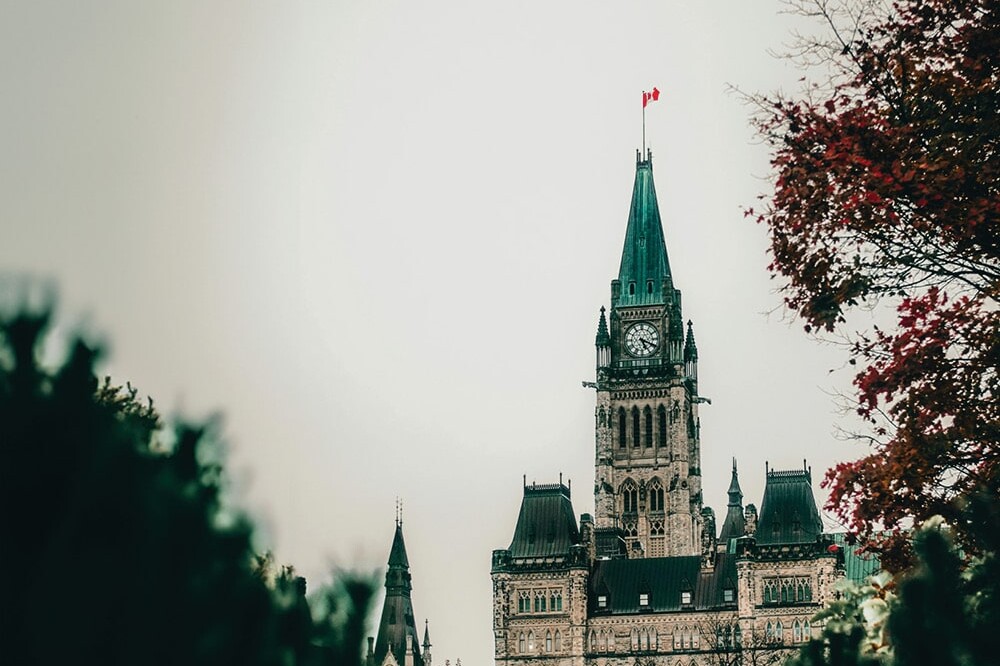
Public Support for Canada’s Political System
Previous research has shown that satisfaction with political institutions and trust in political actors in Canada has gradually been rising over the past decade. This report pushes this analysis deeper, by focusing not only on the national trend, but on sub-national ones as well.
January 27, 2020
January 27, 2020federalism,politics,democracy,americasbarometerReport

Regional Perspectives on Politics and Priorities
The latest Environics Institute Focus Canada survey, conducted during the last two weeks of the recent federal election campaign, highlights some of the regional differences in outlook in Canada that are now reflected in the distribution of seats in the House of Commons.
November 12, 2019
November 12, 2019focus canada,federalism,government roleReport

Public Opinion in Metropolitan Canada
This report examines public opinion on a range of issues in Canada’s four largest metropolitan areas – Montreal, Toronto, Calgary-Edmonton (combined) and Vancouver – areas that together hold 43 percent of the country’s total population.
October 16, 2019
October 16, 2019confederation of tomorrow,federalism,politics,canadian identity,valuesReport
Official Bilingualism at 50
Fifty years after the passage of the Official Languages Act, more than eight in ten Canadians support the policy of official bilingualism.
May 21, 2019
May 21, 2019confederation of tomorrow,federalism,politics,canadian identity,valuesReport
Canada: Pulling Together or Drifting Apart?
This report looks at Canadians' identity within the country, and how they see their province or territory's place in the federation.
March 21, 2019
March 21, 2019confederation of tomorrow,federalism,canadian identity,valuesReport
Making Federalism Work
This report focuses on the ways in which the country’s federal, provincial and territorial governments should work together as federal partners to address key issues.
March 21, 2019
March 21, 2019confederation of tomorrow,federalism,canadian identity,valuesReport