

Fifty years after the passage of the Official Languages Act, more than eight in ten Canadians support the policy of official bilingualism. Eighty-two per cent of Canadians support Canada having two official languages, meaning that all citizens can get services from the federal government in the official language that they speak (either English or French), while 18 per cent are opposed.
Support has also remained stable over time. In 2001, a similar proportion of Canadians (83 per cent) supported the policy. Outside Quebec, 79 per cent currently support Canada having two official languages, while 21 per cent are opposed. Support ranges from a high of 94 per cent in Prince Edward Island to a low of 70 per cent in Alberta.
Across Canada as a whole, 78 per cent of anglophones support the policy, as do 84 per cent of allophones and 93 per cent of francophones. Eight in ten (82 per cent) immigrants also support the policy of official bilingualism. Support is just as high (83 per cent) among those who identity as Indigenous. Younger and older Canadians are equally supportive of the policy of official bilingualism for Canada.
A majority of Canadians also think it is important that the next generation of Canadians learn to speak more than one language. More than three in four (77 per cent) say that it is important to them that their children (if they had any) learn to speak a second language.
Almost all Quebecers (95 per cent) say that it is important that their children learn to speak a second language, as do 71 per cent of Canadians living outside of Quebec.
Francophones (95 per cent) and allophones (91 per cent) are more likely than anglophones to say that it is important that their children learn to speak a second language; but seven in ten (69 per cent) anglophones also think this is important.
The proportion of Canadians who say that it is important that their children learn to speak a second language has declined slightly over time: in 2001, 86 per cent of Canadians said this was important, compared with 77 per cent in 2019. The decline is steeper outside of Quebec (falling from 82 per cent to 70 per cent), and among anglophones (falling from 82 per cent to 69 per cent).
Survey Details
The 2019 Confederation of Tomorrow survey of Canadians was conducted by the Environics Institute for Survey Research, in partnership with five leading public policy organizations across the country: the Canada West Foundation, the Mowat Centre, the Centre D’Analyse Politique – Constitution et Fédéralisme, the Institute for Research on Public Policy, and the Brian Mulroney Institute of Government at Saint Francis Xavier University. The research consisted of a national public opinion survey conducted online (in the provinces) and by telephone (in the territories) with a representative sample of 5,732 Canadians (ages 18 and over) between December 14, 2018 and January 16, 2019.
Data from 2001 is from the Portraits of Canada survey conducted by the Centre for Research and Information on Canada (CRIC). The categories of anglophone, francophone and allophone are based on the language which is spoken most often at home. To allow for a fairer comparison between the 2001 survey, conducted by telephone, and the 2019 survey, conducted online, the “don’t know” responses (which are generally higher in online surveys) were removed.
The Confederation of Tomorrow surveys give voice to Canadians about the major issues shaping the future of the federation and their political communities. They are conducted annually by an association of the country’s leading public policy and socio-economic research organizations: the Environics Institute for Survey Research, the Centre of Excellence on the Canadian Federation, the Canada West Foundation, the Centre D’Analyse Politique – Constitution et Fédéralisme, the Brian Mulroney Institute of Government and the First Nations Financial Management Board.
More from this Series

Related reading
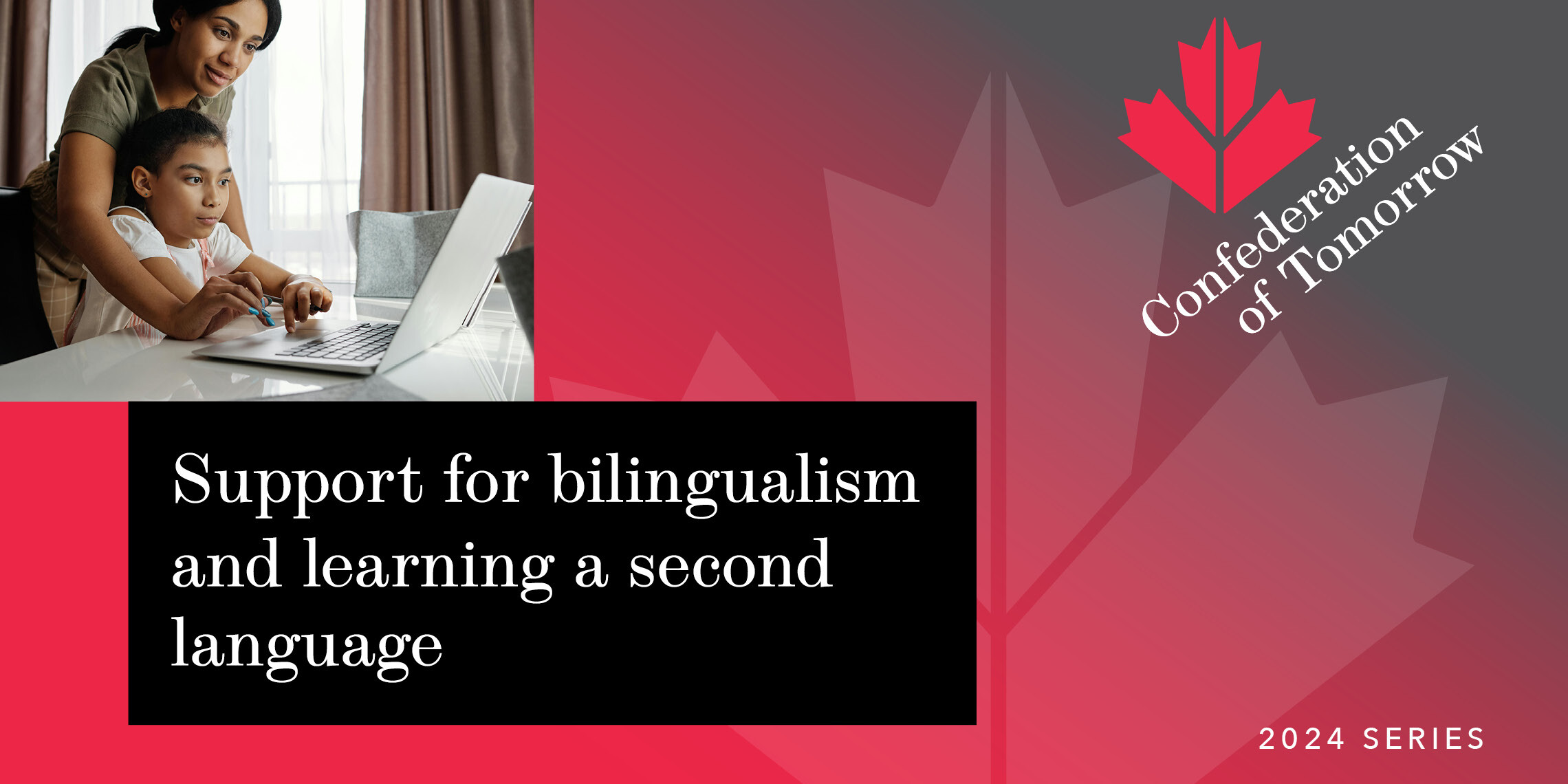
Support for bilingualism and learning a second language
The 2024 Confederation of Tomorrow survey revisits the topic of official bilingualism and the importance of children learning to speak a second language. It finds that support for bilingualism as a policy, and interest in children learning a second language, both remain fairly high.

50 years of multiculturalism
On Oct 8, 1971, then-Prime Minister Trudeau announced multiculturalism as an official government policy. On the 50th anniversary of the announcement, Canadian Geographic is publishing five essays that explore the theme. T

What a difference 50 years make
Anniversaries such as Canada Day are a good time to take stock of long-term changes in the lifestyles, attitudes and values that characterize our society. Incremental changes can seem matter of fact as they unfold in daily life, but their cumulative effects can be remarkable.