

Addressing climate change in the Canadian federation
Prior to the onset of the COVID-19 pandemic, climate change had emerged as one of Canadians’ top concerns. The situation a year later is completely different: naturally, the pandemic now eclipses all other issues as the one Canadians see as most important.
The Role of Governments and the Division of Powers
The COVID-19 pandemic has presented governments in Canada with enormous challenges. While the current priority remains stemming the spread of the virus and accelerating the pace of vaccinations, governments are also looking ahead to the measures needed to shape an economic recovery.

All in this Together?
A year into the COVID-19 pandemic, efforts to limit the spread of the virus continue to depend in large part on the willingness of citizens to modify their behaviours to conform with public health guidelines, notably those relating to physical distancing and wearing masks.

Ten trends that will shape events in 2021
Only a fool would set out to forecast events for 2021 considering the unexpected year we’ve had. But we can still reflect on how the events of the past 12 months have set the stage for what comes next.

Thanks to Quebec millennials, another referendum isn’t looming
Some observers say Canada has never been more divided than it is today. They’re wrong. Oct. 30 marks the 25th anniversary of Quebec’s second referendum on sovereignty.
Identity, Values and Language
The third report explores issues relating to identity, values and language.
Regional Perspectives on the Economy and Climate Change
Regional Perspectives on the Economy and Climate Change is the first in a series of reports that presents the results of this research. It focuses on the evolution of attitudes related to federalism, regionalism and nationalism, and more specifically on the related issues of energy and climate change policies in Canada.
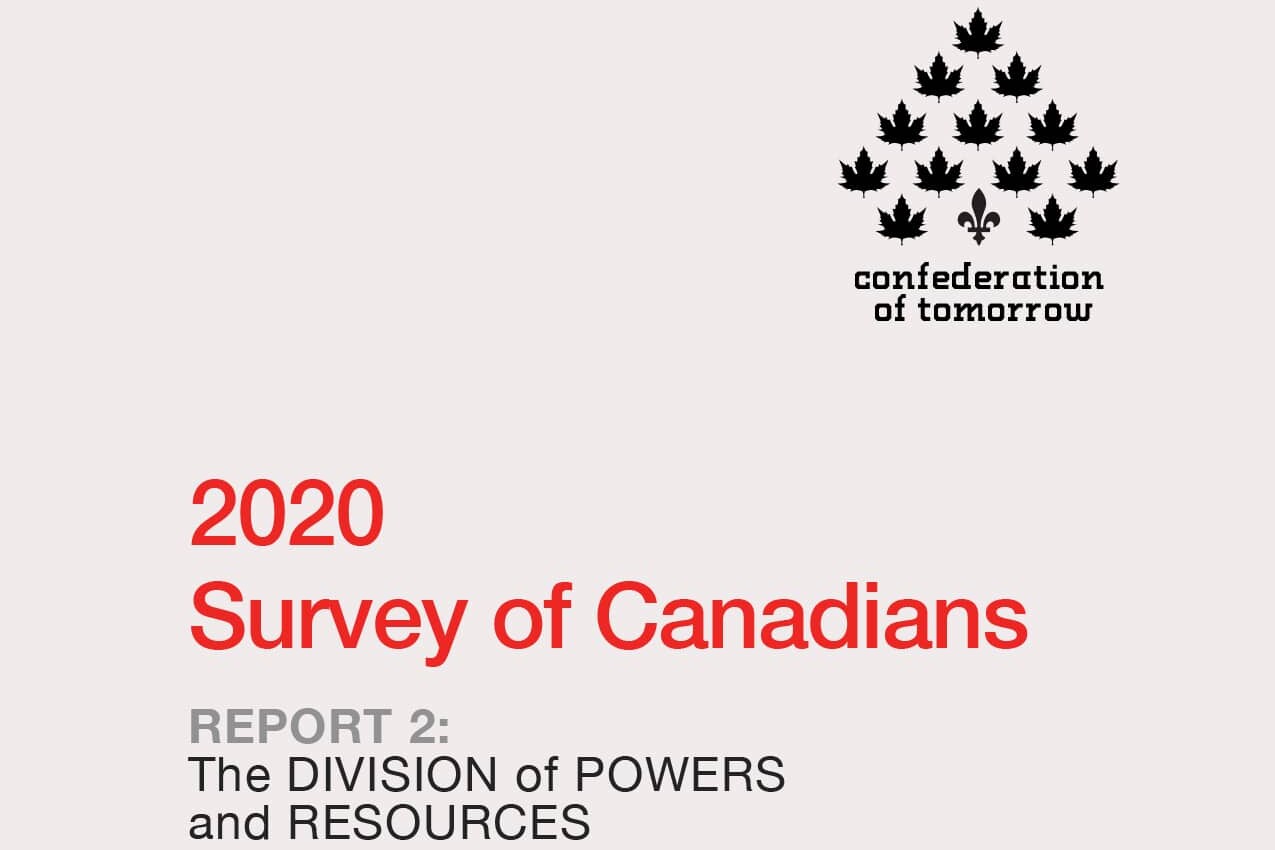
The Division of Powers and Resources
Regional Perspectives on the Economy and Climate Change is the first in a series of reports that presents the results of this research. It focuses on the evolution of attitudes related to federalism, regionalism and nationalism, and more specifically on the related issues of energy and climate change policies in Canada.

A majority of Canadians support equalization – even in Alberta
This coming October will mark the 25th anniversary of the last Quebec referendum on sovereignty. Many Canadians, inside and outside the province, will celebrate by being thankful that we have finally put the era of constitutional plebiscites behind us.

Millennial and Gen Z francophones don’t value Quebec nationalism
The year 2020 will forever be remembered for the COVID-19 pandemic, but it remains significant in other ways. Among other things, it marks 40th and 25th anniversaries of Quebec’s two referendums on sovereignty.