

Refugees face enormous challenges adapting to their new life in Canada. They must navigate an unfamiliar society and culture as they seek to find housing and employment, often with few resources and limited familiarity with the English or French languages. And they must do this at a distance from their family and friends, while coping with the legacy of the traumas that displaced them.

Various agencies and actors can play a role in facilitating the settlement process, such as those that provide language training or employment services.  But often overlooked is the important part played by our public school system in ensuring that the children of refugees are welcomed into Canadian society.

Six in ten Syrian refugee parents (61%) mentioned either the school system in general, or teachers specifically, as the making the most difference for their children.

In a recent study of the experience of Syrian refugees who came to Canada in 2015 and 2016, over nine in ten (92%) of those who were parents said their children had adapted well to life in Canada. And when asked what made the most difference in their children’s success in adapting to life here, by far the most common response from parents was the school system. Six in ten Syrian refugee parents (61%) mentioned either the school system in general, or teachers specifically, as the making the most difference for their children. By comparison, the next most common answers were the general resilience of children (28%), and the friends their children had made (23%).

It is too easy to take these answers for granted: of course our school systems help the children of those fleeing conflict adapt to life in their new country. Yet it is possible to imagine it being different. In some societies, less fortunate than ours, the schools could be an impediment. A different type of public education system could lead to the children of refugees feeling excluded, not included. Teachers could place obstacles in these children’s way, rather than helping to remove them.

While refugees in Canada face serious challenges in terms of securing employment that matches their skills, or finding affordable and adequate housing, Canadians can still be proud of the country’s efforts and actions. But as we continue to welcome refugees from around the world, including Syria, but also, most recently, Afghanistan and Ukraine, we should make sure to share some credit with the country’s schools and teachers. They are not usually thought of as part of Canada’s immigrant settlement system, and yet – as the testimony of Syrian refugee parents shows – they are a key ingredient of our success.

Related reading

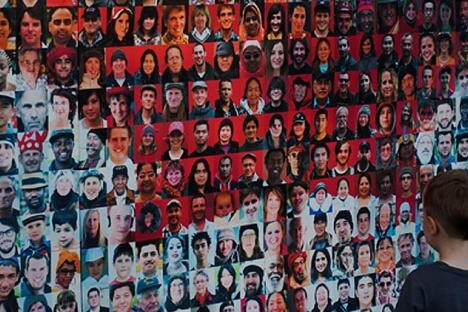
A young boy stands before a wall filled with hundreds of faces in a grid, showcasing the diversity of ages, genders, and ethnicities—reflecting intercultural relations and adaptation in Canada amid contact and discrimination.

Intercultural relations and adaptation in Canada: The role of contact and discrimination

In this report, we seek to explain how and why intergroup contact works to improve intergroup relations, using a representative sample that included racialized and non-racialized individuals in Canada.

Aerial view of a large mosque with a central dome and minarets in a densely built city, surrounded by mountains. The scene highlights diversity much like a race relations Canada infographic, with historic and modern buildings side by side.

Distinct societies: Why Canada, US diverge on Syrian refugees

Two-thirds of Canadians (65%) support the Liberal government’s promise to bring 25,000 Syrian refugees to Canada, according to a recent Nanos survey. About a third (34%) oppose the move either strongly or somewhat.
A promotional graphic titled Perspectives on Growing Older in Canada: The 2024 NIA Ageing in Canada Survey, featuring geometric designs and the NIA logo in the top right corner, highlights key findings from the national Perspectives on Growing Older in Canada report.

Perspectives on Growing Older in Canada: The 2024 NIA Ageing in Canada Survey

The NIA Ageing in Canada Survey is a decade-long annual research program designed to capture Canadians’ experiences, perspectives and expectations on ageing.

Environics Institute for Survey Research

701-33 Bloor Street East
Toronto, ON M4W 3H1

info@environicsinstitute.org

Subscribe to our eNews

Subscribe to our eNews to stay apprised of our latest reports, Insights, events, and media mentions.

Stay Connected