

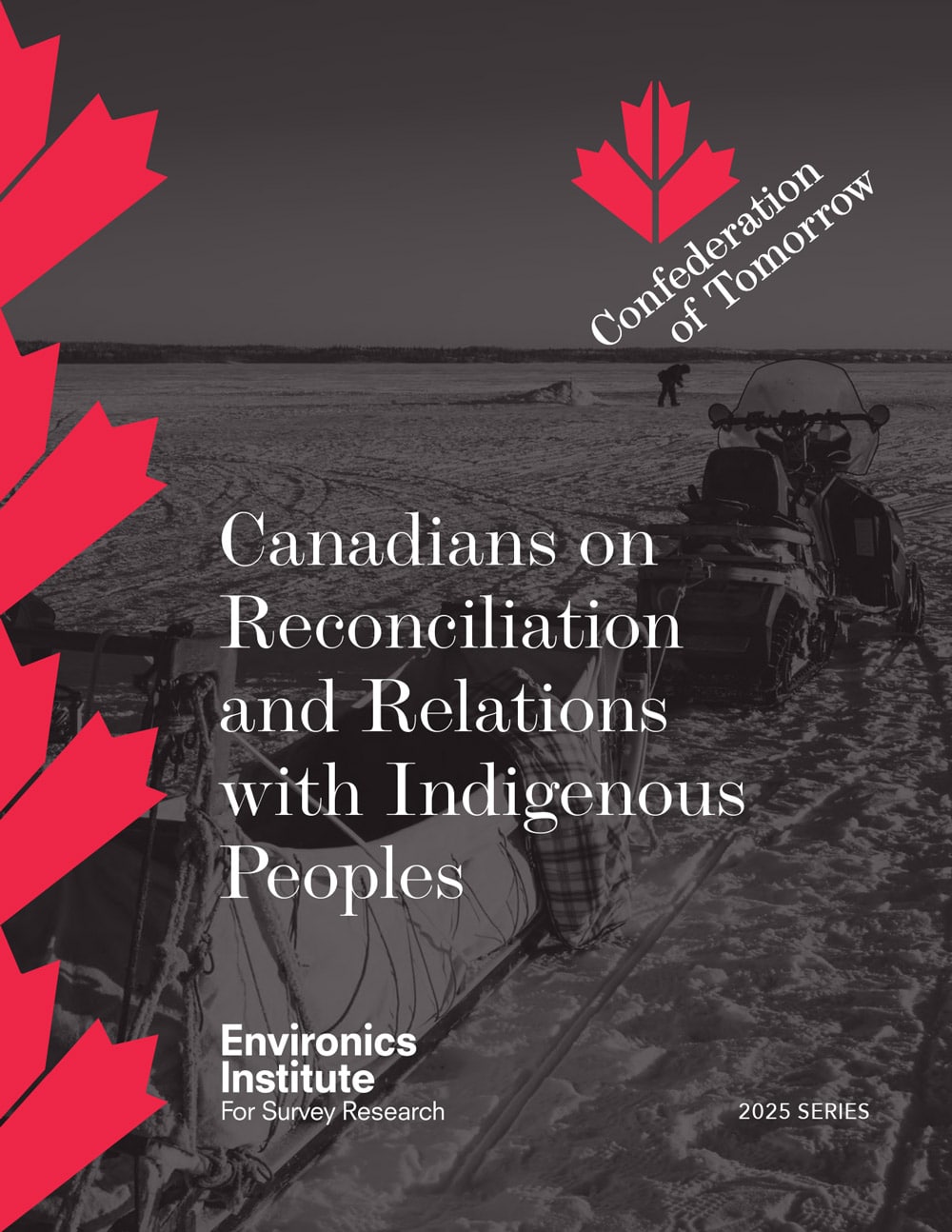
Since 2019, the annual Confederation of Tomorrow surveys have been tracking Canadian attitudes toward Indigenous Peoples and reconciliation. This year’s report from the 2025 survey, published in recognition of the National Day for Truth and Reconciliation, provides an opportunity to assess the state of public opinion on these issues 10 years after the completion of the work of the Truth and Reconciliation Commission.
The survey finds some encouraging trends. For instance, the proportions of both Indigenous Peoples and non-Indigenous people who view current relations between the two groups as positive, and who say they are optimistic that there will be meaningful progress toward reconciliation over the next decade, have both increased. There are also signs that familiarity with the history of Indian Residential Schools in Canada is gradually increasing over time. At the same time, while most feel that individual Canadians have a role to play in bringing about reconciliation, fewer than before believe that governments have not being doing enough.
2025 Survey Details
The 2025 study consists of a survey of 5,391 adults, conducted between May 1 and June 16, 2025 (92% of the responses were collected between May 6 and May 29); 90% of the responses were collected online. The remaining responses were collected by telephone (both landline and cell phone) from respondents living in the North or on First Nations reserves, or from francophone respondents in New Brunswick.
Funder
This project benefits from the financial support of the Research Support Program of the Secrétariat du Québec aux relations canadiennes (SQRC) / Ce projet bénéficie de l’appui financier du Programme d’appui à la recherche du Secrétariat du Québec aux relations canadiennes (SQRC).
Note: the Confederation of Tomorrow uses separate weighting factors for the overall results, the results for residents of the three territories (the North), and for Indigenous Peoples. When reporting results for the territories (individually or as a region) or for Indigenous Peoples, please use the corresponding separate tables.
The Confederation of Tomorrow surveys give voice to Canadians about the major issues shaping the future of the federation and their political communities. They are conducted annually by an association of the country’s leading public policy and socio-economic research organizations.
More from this Series
Related reading
Reconciliation and Relations with Indigenous Peoples 2023
The Confederation of Tomorrow surveys have covered relations with Indigenous Peoples from the beginning in 2019, documenting a gradual shift in Canadian public opinion toward greater support for the rights of Indigenous Peoples and the process of reconciliation.
Reconciliation and Relations with Indigenous Peoples 2024
How do Canadians today see relations between Indigenous and non-Indigenous people and how the process of reconciliation unfolding? Confederation of Tomorrow surveys have been addressing this topic since 2019, and the 2024 survey provides a fresh update on public attitudes from both Indigenous and non-Indigenous perspectives, and how they have evolved over time.
Indigenous Relations and Reconciliation
In the early months of 2020, prior to the arrival of the COVID-19 pandemic in Canada, news headlines in the country were focused on the protests taking place over issues relating to Indigenous Peoples’ rights and control over national resource development.