

This study was conducted in partnership with the Toronto Foundation and over a dozen other leading community organizations in the city.
The concept of social capital is an invaluable tool used to explore the well-being of a city and its residents. Social capital refers to the vibrancy of social networks and the extent to which individuals and communities trust and rely upon one another. It is a key ingredient in making communities productive, healthy, inclusive and safe. Social capital can be seen as a resource that communities can draw upon to respond to crises (through collaboration and mutual support); at the same time, it is a resource that can be depleted, leaving communities less well-positioned to face what comes next.
Conducted more than two years after the start of the pandemic, the 2022 Toronto Social Capital Study assesses whether the crisis brought the city’s residents closer together or pushed them further apart. Its measures of social capital bring into focus the ways in which Torontonians connect with one another, the trust they have in one another and their shared institutions and the extent to which they feel supported by their neighbours and neighbourhoods.
The 2022 study of 4,163 Torontonians compares the situation in the city today with that of 2018, when the first such study was conducted. The Toronto study was complemented by a national online survey of 2,001 Canadian adults commissioned by Community Foundations of Canada, using the same questions and measures of social capital.
Related reading
Toronto Social Capital Study 2018
How can communities best measure the well-being of their citizens? Often this is done using economic measures of employment, income and inequality. There are also statistics reporting on incidences of crime, of homeless or of disease (most recently focusing on cases of COVID-19).

October 8, 2018Reportsocial capital,civic engagement,toronto social capital study
Toronto Social Capital Study 2022
How can communities best measure the well-being of their citizens? Often this is done using economic measures of employment, income and inequality. There are also statistics reporting on incidences of crime, of homeless or of disease (most recently focusing on cases of COVID-19).
November 22, 2022ReportCOVID-19,social capital,health,civic engagement,toronto social capital study
Canadian Millennial Social Values Study
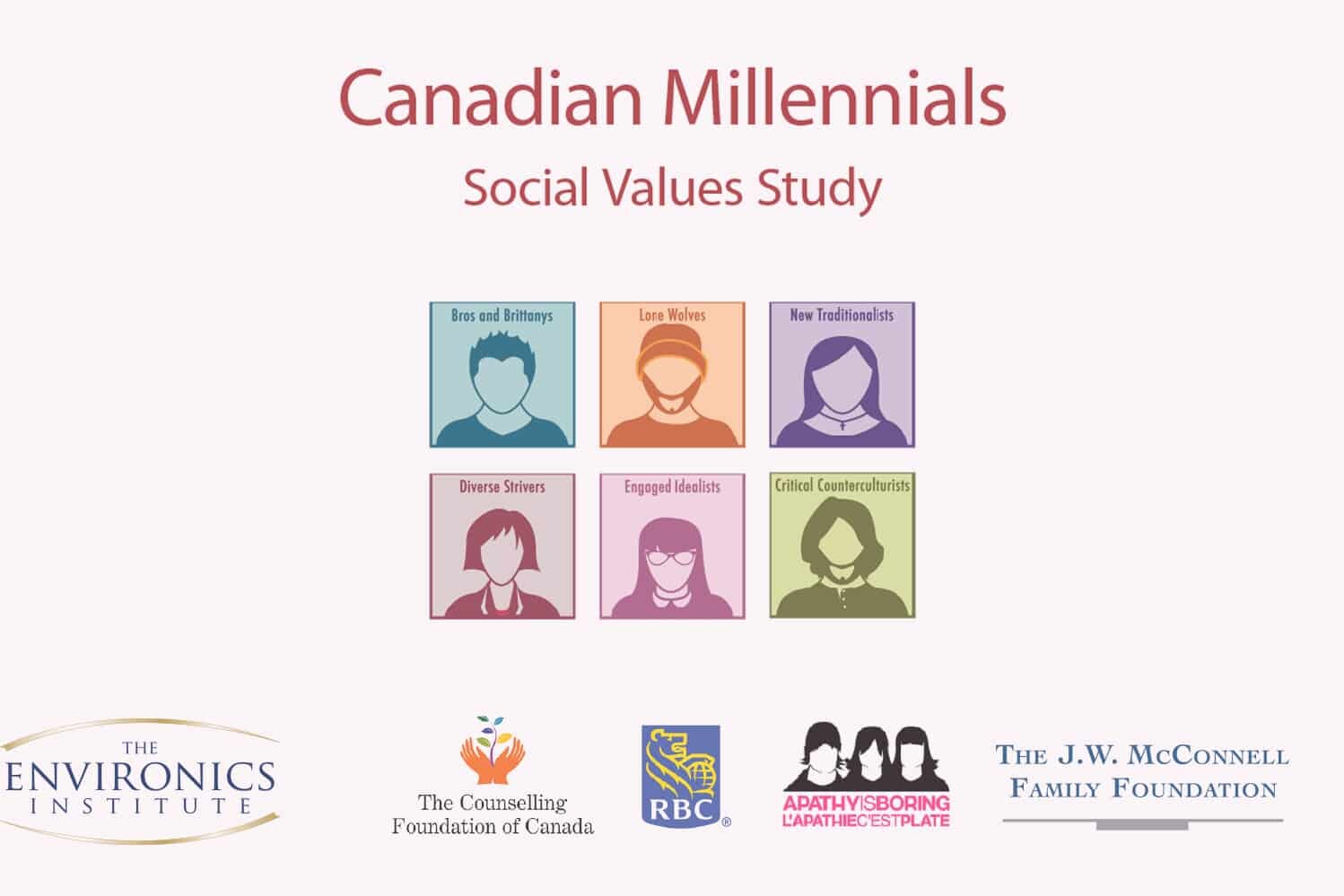
A major national survey conducted in 2016 reveals a bold portrait of Canada’s Millennials (those born between 1980 and 1995), that for the first time presents the social values of this generation, and the distinct segments that help make sense of the different and often contradictory stereotypes that so frequently are applied to today’s young adults.
February 28, 2017Reportsocial values,social change,youth,millennials & genz,michael adams


