

The Institute has partnered with the Toronto Foundation and other leading civic organizations on a new research initiative to map the level of social trust and community engagement among Toronto residents, and provide a foundation for strengthening the social capital of the city.
“Social capital” is the term used to describe the vibrancy of social networks and the extent to which there is trust and reciprocity within a community and among individuals. It is the essential “lubricant” that makes it possible for societies to function, and for people to get along peacefully even when they have little in common. To what extent do Torontonians feel connected to, and actively engage with, their neighbours and community organizations? How well do they trust their neighbours? These questions matter because social trust and engagement are critical to a good quality of life, a healthy population, safe streets, and economic prosperity.
Based on the principle of “you can only manage what you measure”, this project will provide the public, private, not-for-profit, and philanthropic sectors with the empirical basis for data-driven policies, programs initiatives, and investments that will sustain and strengthen the community’s social capital, social cohesion and subjective well-being, and the benefits that flow from them.
Survey Details
The survey was conducted with 3,207 city residents between March 12 and July 10, 2018, in English, Portuguese, Mandarin and Cantonese. The survey was administered by telephone and online, with sample quotas established by population characteristics (e.g., neighbourhood areas, age, gender) based on the most current population statistics.
Partners
The study is being conducted by the Environics Institute for Survey Research, in partnership with Toronto Foundation, as well as TAS Design Build, Community Foundations of Canada/Canadian Heritage, MLSE Foundation, United Way Greater Toronto, the Wellesley Institute, and the Ontario Trillium Foundation. Additional support has been provided by the National Institute on Ageing, Environics Analytics, CanadaHelps, and the City of Toronto and Toronto Public Health.

This project provided the public, private, not-for-profit, and philanthropic sectors with the empirical basis for data-driven policies, programs initiatives, and investments that will sustain and strengthen the community’s social capital, social cohesion and subjective well-being, and the benefits that flow from them.
More from this Series
Related reading
Toronto Social Capital Study Video
Conducted more than two years after the start of the pandemic, the 2022 Toronto Social Capital Study assesses whether the crisis brought the city’s residents closer together or pushed them further apart.
Toronto Social Capital Study 2022
How can communities best measure the well-being of their citizens? Often this is done using economic measures of employment, income and inequality. There are also statistics reporting on incidences of crime, of homeless or of disease (most recently focusing on cases of COVID-19).
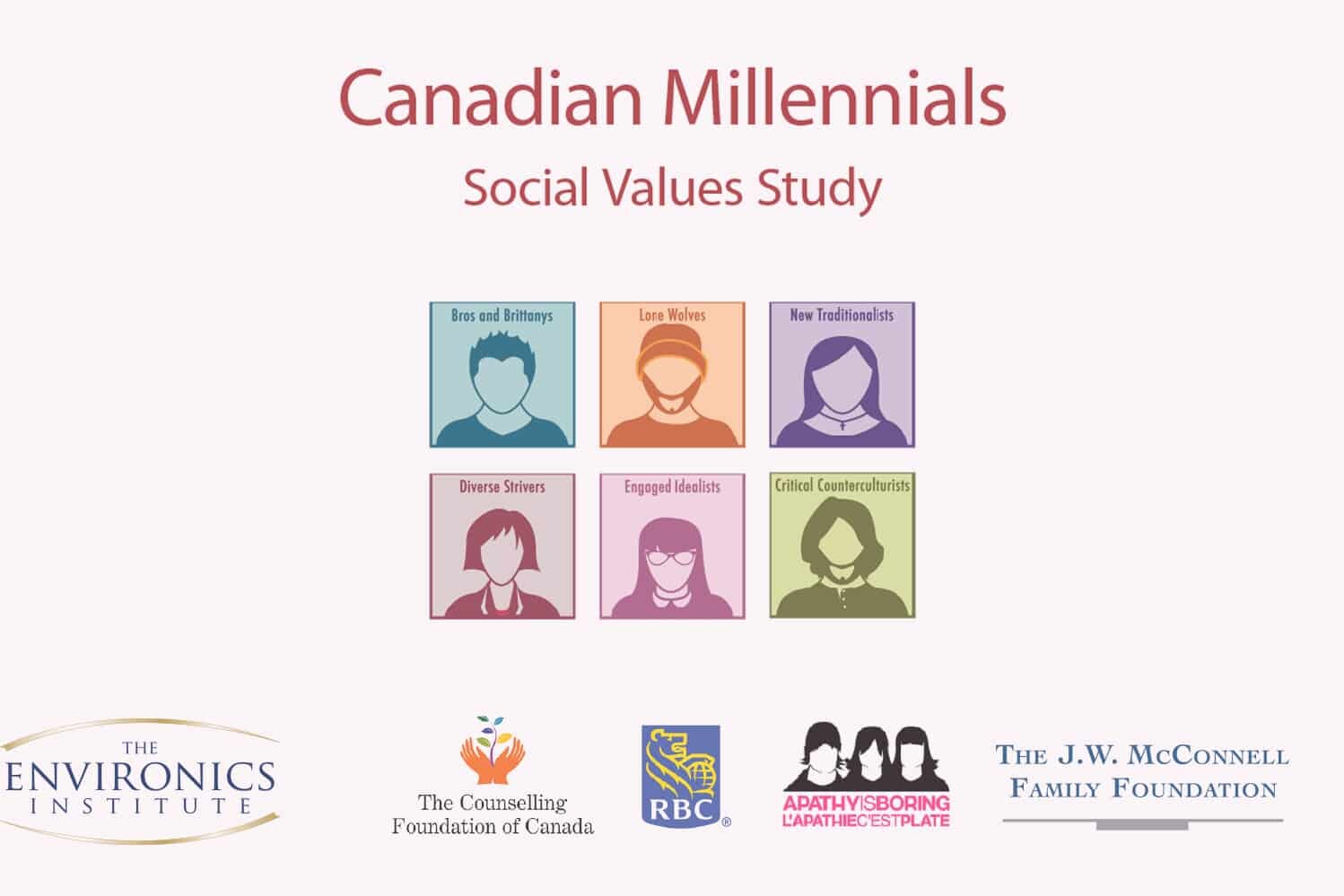
Canadian Millennial Social Values Study
A major national survey conducted in 2016 reveals a bold portrait of Canada’s Millennials (those born between 1980 and 1995), that for the first time presents the social values of this generation, and the distinct segments that help make sense of the different and often contradictory stereotypes that so frequently are applied to today’s young adults.