

Michael Adams & Monica Patten. Globe & Mail. October 13, 2009. Michael Adams is president of the Environics group of research and communications consulting companies and Monica Patten is president and chief executive officer of Community Foundations of Canada.
Toronto Mayor David Miller might be the only prominent figure in history to leave a high-powered job claiming he wants to spend more time with his family – and actually mean it. Explaining his decision not to run for a third term as mayor, Mr. Miller discussed in detail the moments of his kids’ lives he had missed during his six years at the reins of Canada’s largest city, and he said his first post-mayoral gig will be to serve as assistant coach to his 14-year-old daughter’s soccer team.
The public might have been forgiven for initially assuming that “I need more time with my family” was code for “I am tired of trying to run a 21st-century city in a 19th-century system.”
Like many societies around the world, Canada has urbanized at a tremendous rate over the past century. According to Statistics Canada, the proportion of the Canadian population living in urban regions was 80 per cent in 2006 – a dramatic shift from the start of the 20th century, when just 37 per cent of us lived in urban regions. Moreover, the demographics of our cities have changed radically: Once dominated by people of European heritage, they are now populated by immigrants and the descendants of immigrants from everywhere on the planet, including increasing numbers of aboriginal peoples.
Many of our systems – political, economic, infrastructural – have had a hard time keeping pace with this massive demographic shift. Mr. Miller was handling not only the ordinary managerial issues that face any municipal leader (a city workers strike over the summer was one recent hurdle), but also the broader systemic challenge of leading a fast-growing city with one of the most diverse populations on Earth, while wielding very little power to generate revenue or fund advances in areas such as planning, transit and infrastructure. Citizens watch in dismay as their mayors implore senior governments for a share of their own tax dollars, like children begging for candy, and wonder who is to blame in this perennial charade.
A recent survey of Canadian public attitudes suggests that people living in Canada’s larger cities are less satisfied with their local quality of life than people living in smaller towns – a finding that may indicate that this country’s urbanites are feeling the lag between what their cities need in order to thrive and what existing systems are able to provide.
In August, 2009, Community Foundations of Canada commissioned Environics to survey Canadians about the quality of life they experience in their communities across the
country. The survey found that Canadians are generally very pleased with the quality of life they enjoy locally. Nearly nine in 10 describe the quality of life where they live as at least good and more than a third (36 per cent) describe it as excellent.
But there is a notable variation by community size in the quality of life Canadians report. Among those in communities of fewer than 5,000 residents, 43 per cent rate local quality of life as excellent, as compared with 32 per cent of those in cities of 100,000 people or more.
Life in smaller towns isn’t perfect: Canadians in smaller centres report a greater sense of urgency about revitalizing their local economies and obtaining better health care close to home. But, over all, residents of smaller towns are not only more satisfied today, they also have more confidence that their local leaders are capable of making the changes necessary to improve life in their communities over time.
When Canadians are asked about their confidence in various forms of leadership, they say they have the greatest faith in the leaders of charities and community organizations to make a positive difference in their communities. Three-quarters of Canadians (77 per cent) have at least some confidence in those in the charitable sector, while business leaders (70 per cent) and elected municipal leaders (63 per cent) inspire less – but still majority – confidence. One in two Canadians (50 per cent) sees religious leaders as likely to improve the local quality of life. But here again we find notable differences between big-city residents and people in smaller towns: Canadians in communities of 5,000 people or fewer express higher levels of confidence in every type of local leadership.
Do small-town leaders inspire greater trust because, rooted in smaller communities, they are more likely to know their voters, customers, donors and spiritual adherents personally? Probably. But it’s also likely that small-town leaders really are more equal to the challenges of their local communities because those challenges have not changed as rapidly as those of big cities, which are more likely to be sites of immigrant-integration challenges, transportation conundrums, pandemic threats, organized crime, large-scale waste and energy issues, and other pressing contemporary worries.
Recognizing that the challenges our cities face are immense and urgent, leaders from a range of backgrounds and sectors have begun to tackle urban issues with new seriousness. These leaders recognize that urbanization has caused a seismic change in the way Canadians relate to each other and engage with the state – and that cities can’t wait for provincial or federal powers to make the necessary changes.
The Maytree Foundation, for instance, has called for more power and autonomy for Canadian cities, and launched the C5 initiative, which brings together the mayors and civil-society leaders of Vancouver, Calgary, Winnipeg, Toronto and Montreal to share information and ideas. Community foundations in Canada are active partners with Maytree, along with a host of other community-based organizations. As well, local community foundations are working to advance a range of important projects with other
partners, from a citywide poverty-reduction project in Hamilton to targeted education programs in some of Winnipeg’s poorest neighbourhoods.
Some urban solutions are coming from government, but many – as ordinary Canadians seem to have already whiffed – are coming from business and civil-society organizations that are less constrained by jurisdictional boundaries and systemic inertia.
As Canada’s big cities continue to grow, and a dwindling oil supply suggests that density may be the only way forward, we will need all the help we can get in finding ways to make our urban centres wonderful places to live, work and participate – for mayors, kids, assistant soccer coaches and everyone else.
Related reading

Global Survey on Women as National Leaders
Throughout history, politics has been largely a man’s world. The 20th century witnessed significant changes, through women’s suffrage and the emergence of women as leaders of parties and nations, albeit at a slow pace and unevenly across the globe.

Confidence in Leaders
In 2021, almost a year into the COVID-19 pandemic, the Confederation of Tomorrow Survey of Canadians addressed the issue of public confidence in scientists, government medical advice and political leaders.
May 2, 2023Reportconfederation of tomorrow,politics,social capital,democracy
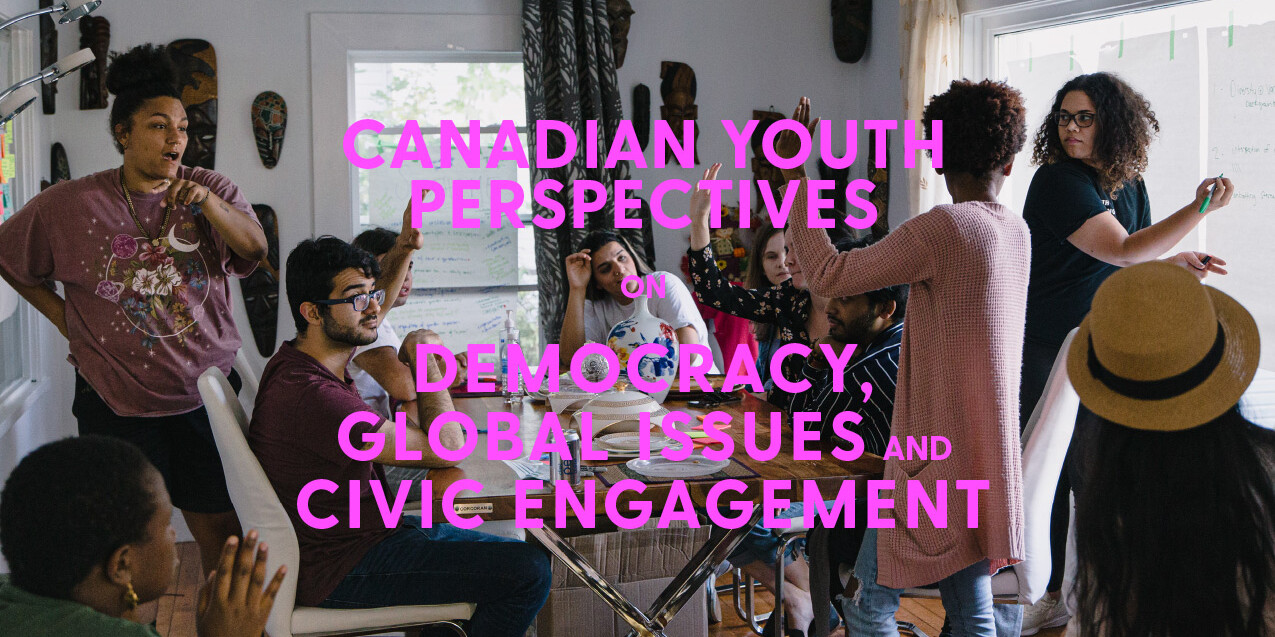
Canadian youth perspectives on democracy, global issues and civic engagement
This study covers a large and diverse population but it is nonetheless possible to draw from it a broad portrait of leading-edge Generation Z and Millennial Canadians.