

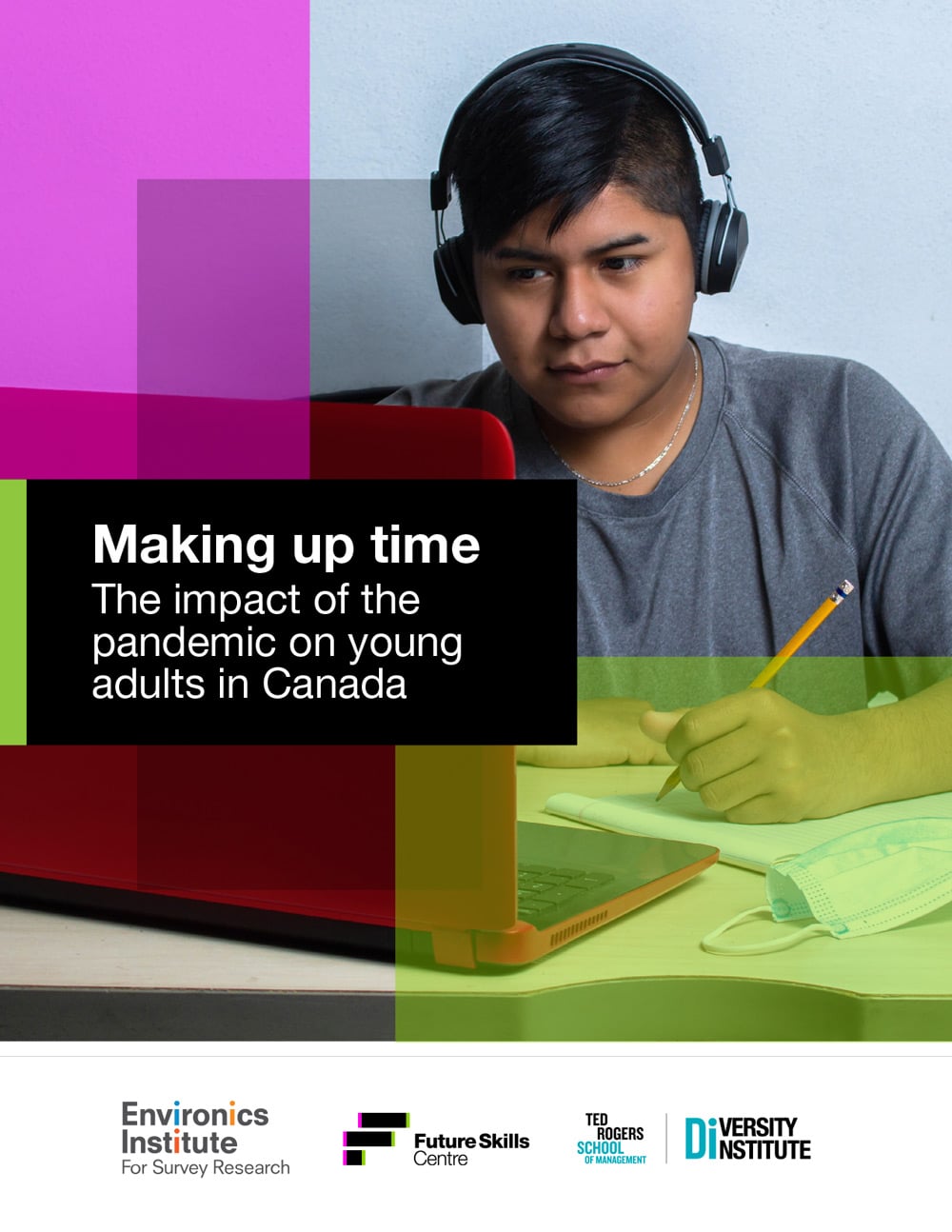
Making Up Time: The Pandemic’s Impact on Young Adults in Canada
A report from the Survey on Employment and Skills (3rd wave)
This report explores the experiences during the pandemic of younger adults, defined as those between the ages of 18 and 34. It documents, not only the extent to which Canadian youth as a whole have been especially hard hit economically by the pandemic, but also how specific groups of youth – notably Indigenous youth, Black youth, youth with a disability, youth without a postsecondary education, and recent postsecondary graduates – have each encountered particular challenges.
Survey Details
The Survey on Employment and Skills is conducted by the Environics Institute for Survey Research, in partnership with the Future Skills Centre and the Diversity Institute at Toronto Metropolitan University.
The third wave of the study consists of a survey of 5,913 Canadians age 18 and over, conducted between June 1 and June 28, 2021, in all provinces and territories. It was conducted both online (in the provinces) and by telephone (in the territories).
Funder
The Survey on Employment and Skills is funded primarily by the Government of Canada’s Future Skills Centre / Le sondage sur l’emploi et les compétences est financé principalement par le Centre des Compétences futures du gouvernement du Canada.

Temps de rattrapage : L’impact de la pandémie chez les jeunes adultes au Canada
Le présent rapport explore les expériences vécues pendant la pandémie par les jeunes adultes, que l’on définit comme étant les personnes âgées de 18 à 34 ans. On y fait état non seulement de l’ampleur des répercussions économiques de la pandémie sur l’ensemble des jeunes adultes au Canada, mais également de la façon dont certains groupes spécifiques de jeunes adultes ont dû faire face à des défis particuliers. Parmi ces groupes, on retrouve notamment les jeunes adultes autochtones, les jeunes adultes noir. e. s et les jeunes adultes vivant avec un handicap, sans formation postsecondaire ou ayant récemment obtenu un diplôme d’études postsecondaires.
L’enquête sur l’emploi et les compétences est menée par l’initiative d’Environics Institute for Survey Research en partenariat avec le Centre des Compétences futures et le Diversity Institute de la Toronto Metropolitan University.
La troisième vague consiste en un sondage mené auprès de 5 913 Canadiens et Canadiennes âgé.e.s de 18 ans et plus, et ce, entre le 1er et le 28 juin 2021 dans l’ensemble des provinces et territoires. Il a été mené en ligne (dans les provinces) et par téléphone (dans les territoires). Elle a été menée à la fois en ligne (dans les provinces) et par téléphone (dans les territoires).

The Survey on Employment and Skills is conducted by the Environics Institute for Survey Research, in partnership with the Diversity Institute at Toronto Metropolitan University and the Future Skills Centre.

Related reading
Making Federalism Work
This report focuses on the ways in which the country’s federal, provincial and territorial governments should work together as federal partners to address key issues.

All in this Together?
A year into the COVID-19 pandemic, efforts to limit the spread of the virus continue to depend in large part on the willingness of citizens to modify their behaviours to conform with public health guidelines, notably those relating to physical distancing and wearing masks.
Widening inequality
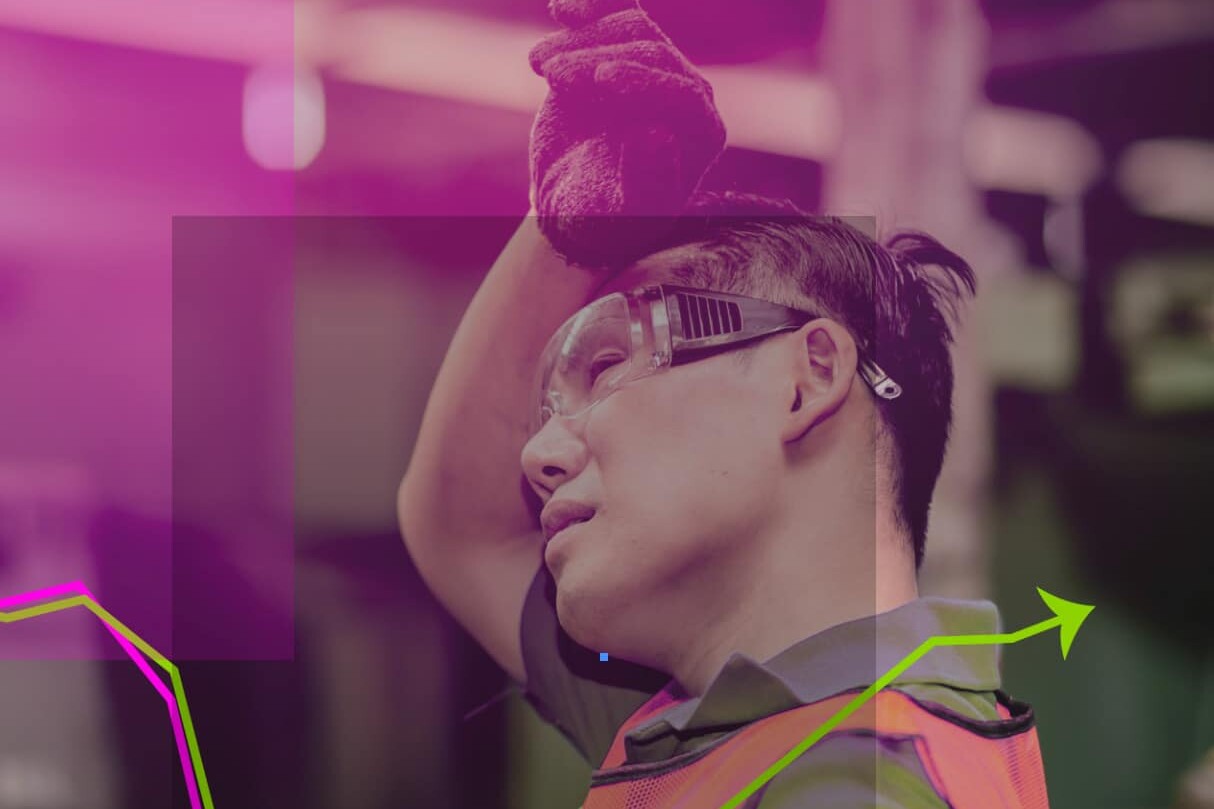
This report from Wave 2 of the Survey on Employment and Skills examines the overall impact of the pandemic, as well as more specific experiences such as loss of hours of work, loss of employment or loss of income.