


Michael Adams. Globe & Mail. June 30, 2012. Michael Adams is president of the Environics Institute and the author of Fire and Ice: The United States, Canada, and the Myth of Converging Values.

It seems every day Canadians awake to another sober message from a bank economist or cabinet minister – one part scolding, one part warning, all very serious. We are spending too much relative to our earnings. We are overextending ourselves when we buy houses, and we are even taking on more debt than our supposedly more spendthrift American cousins. The priests of commerce are telling us we are sinners.

But lurking behind the dire headlines about consumer debt and our creeping profligacy is a strange new reality: The average Canadian has quietly become richer than the average American. Over the past five years, net worth per Canadian household has exceeded net worth per American household (total combined value of liquid and real estate assets minus debt) for the first time.

Currently, the average Canadian household is more than $40,000 richer than the average American household. (According to the latest Environics Analytics WealthScapes data, the average household net worth in Canada was $363,202 in 2011; in the U.S. it was
$319,970.) And these are not 60-cent dollars, but Canadian dollars more or less at par with the U.S. greenback. Furthermore, these figures ignore public-sector (government) debt that presumably people on both sides of the border or their children will some day have to pay. Such debt is higher in the U.S. as a percentage of GDP than it is in Canada.

Has Canada experienced a sudden surge of productivity or entrepreneurial genius? Not exactly. Our resource sector is certainly firing on all cylinders, but the biggest reasons for Canadians’ deep pockets relative to Americans’ in recent years are the related phenomena of the 2008 economic crisis and the collapse of the U.S. housing market. Because house prices in the U.S. have plunged, the real estate held by Canadians is now much more valuable than that held by Americans (worth over $140,000 more on average). In fact, Canadians hold more than twice as much real estate as Americans and, once mortgages are factored in, have almost four times as much remaining equity in their real estate.
Americans’ liquid (non-real estate) assets are still greater than Canadians’.

But if we cannot take full credit for our greater wealth on paper, nor should we be too badly excoriated for our greater levels of household debt. Consumer confidence north of the border has been justifiably stronger. (Hard-hit Americans are, reasonably, more fearful.) More Canadians also simply have increased room to borrow; Americans are more maxed out – not least on those cumbersome mortgages.
Canadians have traditionally been the cautious, fiscally conservative society, watching American economic dynamism from a safe remove (and subsisting on a small cut of the

branch-plant spoils). For us, paying off the mortgage was once the equivalent of forgiveness for our acquisitive sins. Our public policies were more prudent than the U.S. policy of allowing home owners to deduct the interest on mortgage debt. Canadian leaders rejected mortgage interest deductibility and fortunately Canadians only briefly embraced the subprime mortgages that are still a huge factor in Americans’ fiscal woes.

A decade and a half ago, our leaders fretted about “brain drain” as some of our best young grads migrated south toward the land of opportunity instead of settling for our safer economic landscape – with more unions, more government security blankets (like medicare and public pensions) and, of course, higher taxes and more regulation. But after the 2008 crisis, when U.S. financial institutions went from dynamic to dangerous, the drab safety of Canadian fiscal conservatism began to cut a more pleasing figure.

For the moment, it seems that the risk-averse Canadian tortoise has the lead in the race against the risk-taking American hare, who has singed his feet on his rocket pack. How Canadians will respond to this at the household level remains to be seen. Are we naively careering toward American-style (pre-crash) financial behaviour with loaded credit cards, second and third mortgages, and a lax approach to savings in a headlong pursuit of materialism, hedonistic pleasures, and instant gratification? Or does it say something about our abiding national character that we have so many sober souls in positions of power who will mete out regular scoldings like the clergy in pulpits of old and do things like change our mortgage rules to protect us from ourselves?

Related reading

A turquoise river flows past rocky cliffs covered with dense pine trees, with a forested mountain rising in the background under a cloudy sky—reflecting how coronavirus will not dent the trust Canadians have in each other.

Canadians: richer than they think

Americans don’t often talk about Canada, except when they need a foil in a political debate. Bernie Sanders has praised our health-care system. Gun-control advocates point to radically lower rates of firearms fatalities north of the border.
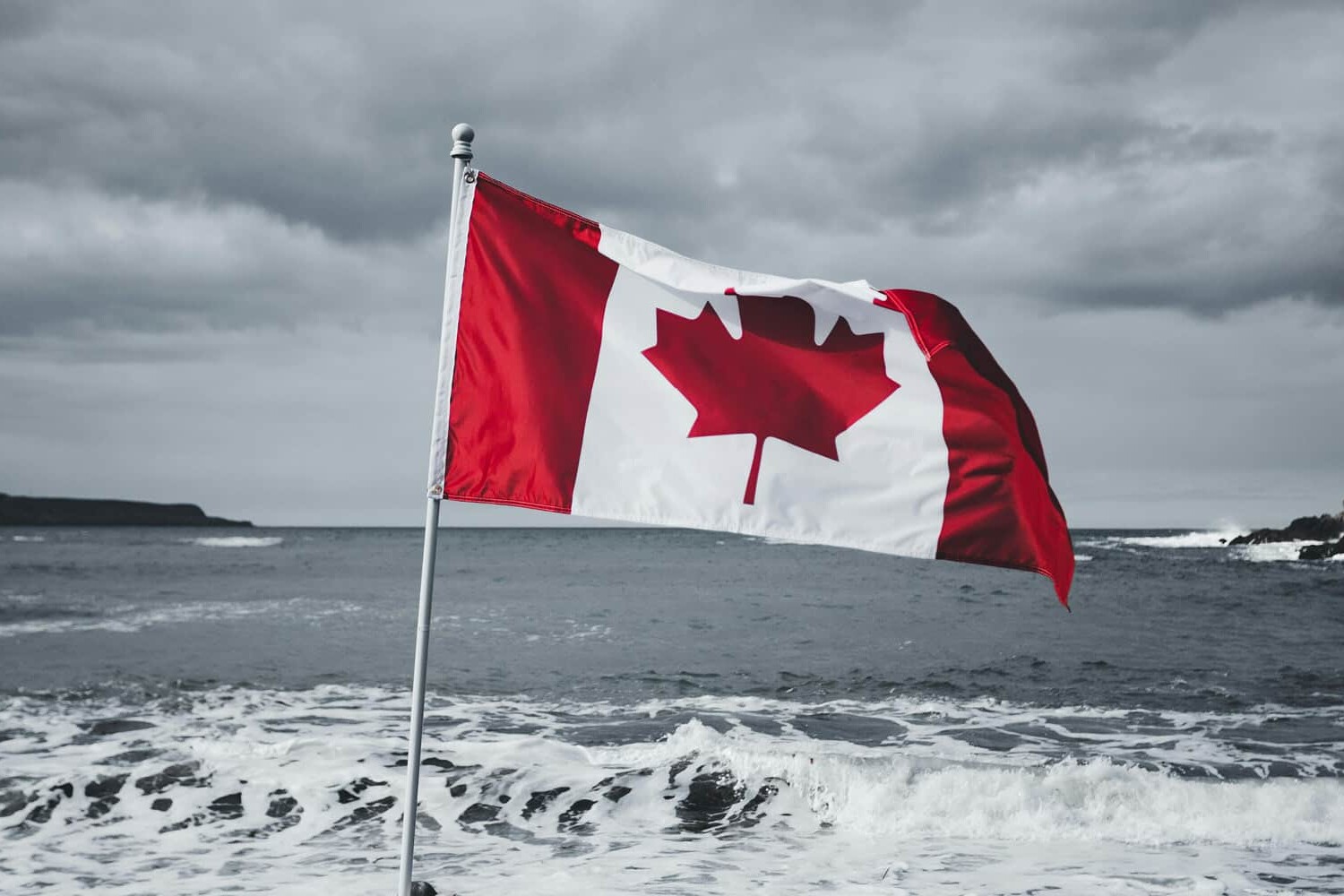
A Canadian flag with a red maple leaf waves on a pole by the ocean, with waves crashing on the shore and a cloudy, overcast sky in the background—prompting some to wonder: is one region favoured by Ottawa?.

Canadians are still committed to decentralized federalism

There is never any shortage of reasons to track the ups and downs of regional grievances in Canada: Every year brings new developments that fuel perceptions of regional winners and losers.

Close-up of two hockey players facing off on an ice rink, their skates and sticks poised, capturing the intensity of Hockey Fighting and What it Means to Be A Man as they battle for the puck.

Canadians on Hockey 2012

Hockey has long held a central place in Canada, and the National Hockey League is the flagship arena for the sport. Professional hockey has long stood out for the aggressive style of play, which has largely been accepted as just a part of the game.

Environics Institute for Survey Research

701-33 Bloor Street East
Toronto, ON M4W 3H1

info@environicsinstitute.org

Subscribe to our eNews

Subscribe to our eNews to stay apprised of our latest reports, Insights, events, and media mentions.

Stay Connected