

Michael Adams & Keith Neuman. Globe & Mail. December 14, 2009. Michael Adams is president of the Environics group of companies, and Keith Neuman is group vice-president of public affairs at Environics Research.

The climate-change Olympics are still under way in Copenhagen, with each nation in attendance participating in a bizarre competition to see how well they can pronounce the party line on climate change while making the fewest concessions for tough actions back home. Canada has already been singled out for being too protective of its domestic interests and stalling progress toward an agreement. But how is our government’s approach playing with the group whose opinions really matter to it: Canadian voters?

The Harper government’s position certainly aligns with the views of Conservative voters, who are among the least concerned about the environment generally and climate change in particular. But, on this issue, Conservatives are out of step with the majority. Most Canadians are concerned about the issue; accept climate change as real and human-caused; believe an international agreement on reducing greenhouse-gas emissions is critical; and want Canada to sign it if one can be drafted.

The desire for climate action is strongest in Eastern Canada but is also present to a lesser degree in the oil-producing provinces of Alberta and Saskatchewan. Given the public mood, can Prime Minister Stephen Harper get away with promising the minimum on climate-change action?

Yes, in the short term. Climate change is not (yet) an issue capable of threatening the Conservatives’ hold on the government, and there are three fundamental reasons for this. First, while Canadians are truly concerned about climate change, it is not a bread and butter issue like jobs and taxes. Moreover, the intensity of the public’s concerns has been diminishing gradually since hitting a peak in 2007. Second, while Canadians are coming to recognize the potential effects of climate change, they remain largely unsure about solutions. This makes it difficult to know whom to believe and what policy to line up behind.

Third, none of Canada’s political parties has made the investment necessary to establish itself in a clear leadership position on climate (except the Green Party, which remains a niche player). In a recent Environics survey, 53 per cent of Canadians said it wouldn’t matter which party formed the next government, in terms of effectively tackling climate change. The opposition Liberals seem frozen in indecision on this, as on so many other issues, unwilling or unable to find an issue of principle on which they are willing to stake their electoral future. The Liberals have reason to be gun-shy, of course, with the ghost of Stéphane Dion’s disastrous Green Shift hovering in their midst.

What this all means is that the constituency for an assertive climate-action commitment is neither large enough nor vocal enough to bring real political pressure on the federal government. The Harper government can manage public expectations at home in the short term simply by showing up at Copenhagen, not standing out from the pack (or winning too many Fossil of the Day awards), and tucking itself under the wing of whatever the Americans stand for. If it’s good enough for Barack Obama, it’s good enough for Canada.

But the strategy that is likely to carry the Conservatives through Copenhagen has an expiry date. Pressure for climate action around the globe will almost certainly grow in the years to come. Canadians will be concerned not only with the fate of the planet but also with the fates of vulnerable populations in other parts of the world whose territory and security may face profound threats from rising sea levels and natural disasters. These people, after all, are family and friends to some of the four in 10 of us who are first-or second-generation Canadians.
Canadians have a strong desire for their country to be respected as a moral beacon and to set an example on the global stage. Our skins are not as thick as those of Americans, who are accustomed to being criticized. If Canadians begin to be embarrassed by our government’s foot-dragging, the conditions may then become ripe for the Liberals to tap into Canadians’ sense of idealism and guilt by building an effective environmental platform that puts us on the right side of history when Canadians next go to the polls.

Or, of course, Mr. Harper could convert on the road to Damascus and replace David Suzuki as Canada’s iconic environmentalist. The Liberals had better hope he doesn’t – such a change of heart would block their most promising path back to office.

Related reading

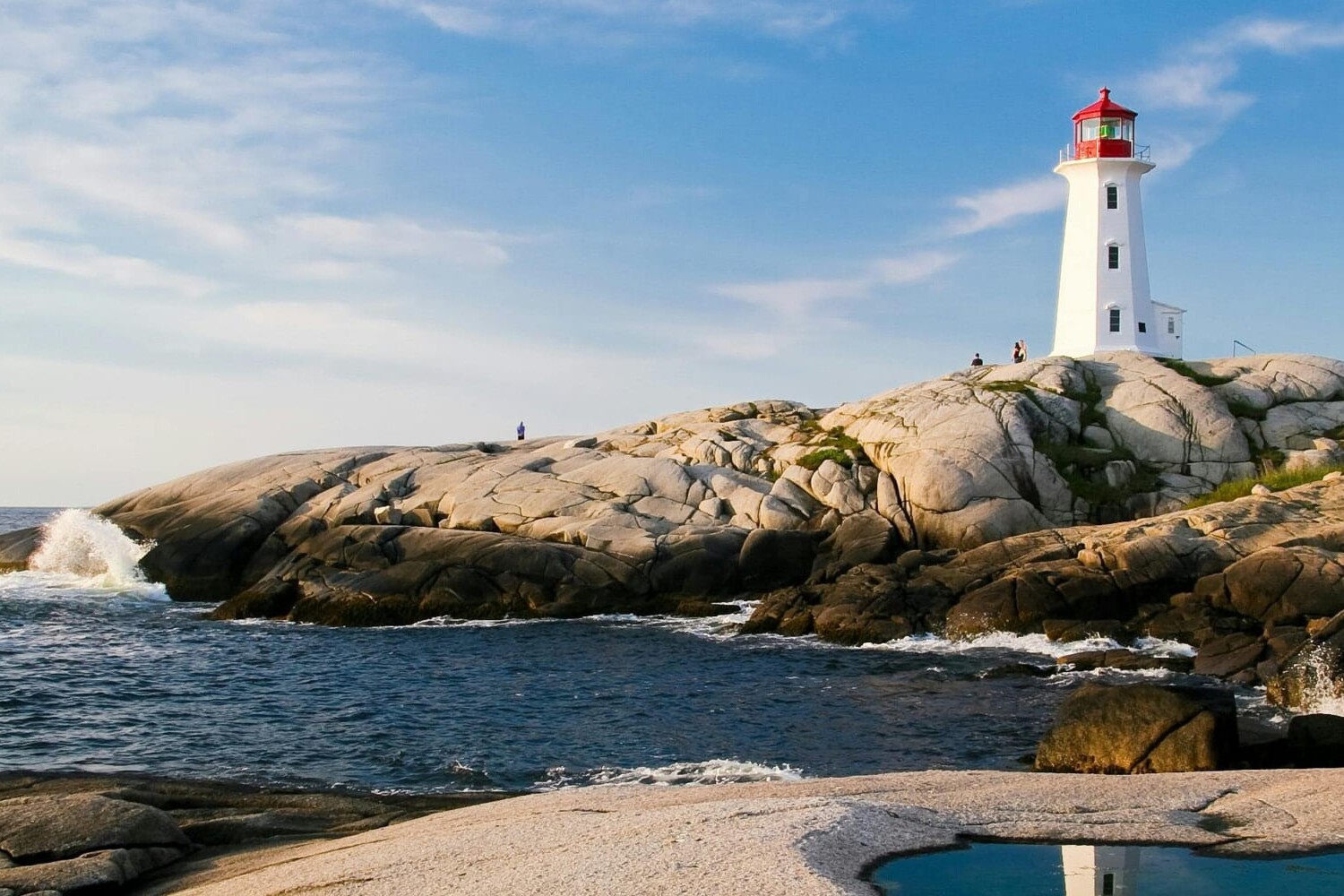
A white lighthouse with a red top stands on smooth gray rocks by the ocean under a blue sky. Waves crash nearby, and a few people linger—our elbows may be up but have Canadians really changed in these timeless coastal moments?.

There’s now a Canadian consensus: It’s time for action on climate change

As global warming emissions reach record-breaking levels, Canada’s environment minister will join world leaders in Lima, Peru, next week for the latest round of UN talks on an action plan to fight climate change.
Red text reads

Addressing climate change in the Canadian federation

Prior to the onset of the COVID-19 pandemic, climate change had emerged as one of Canadians’ top concerns. The situation a year later is completely different: naturally, the pandemic now eclipses all other issues as the one Canadians see as most important.

A serene arctic landscape with rocky terrain in the foreground, calm water reflecting mountains, and a bright moon illuminating the blue-toned sky—much like the shifting lens through which Canadians see the Wet’suwet’en crisis.

Canadian Public Opinion About Climate Change 2013

Where does the Canadian public stand today on the issue of climate change? Have Canadians lost interest or do they remain concerned and want strong actions to address the problem?

Environics Institute for Survey Research

701-33 Bloor Street East
Toronto, ON M4W 3H1

info@environicsinstitute.org

Subscribe to our eNews

Subscribe to our eNews to stay apprised of our latest reports, Insights, events, and media mentions.

Stay Connected