


Co-presented by Environics Institute for Survey Research and Munk School for Global Affairs & Public Policy.

Canadian observers of the Quebec political scene are confronted with an apparent paradox. On the one hand, sovereignty has fallen off the political agenda, with the Parti Québécois anticipated to be all but shut out of the Assembly after the October provincial election. On the other hand, the CAQ government is spearheading an activist agenda based on identity politics, through legislation such as Bills 21 and 96. The culmination of the court challenges to these bills (through eventual rulings from the Supreme Court) risk triggering a renewed debate about the legitimacy of the Canadian constitution and of federal political institutions in the eyes of francophone Quebecers. In the face of these developments, should Quebec’s federal partners be celebrating the end of the threat posed by the sovereigntist movement, or gearing up for a new national unity crisis? Featured

Speakers:

  • Emilie Nicolas, Columnist with Le Devoir and the Montreal Gazette
  • Andrew Parkin, Executive Director, Environics Institute
  • Charles Breton, Executive Director, Centre of Excellence on the Canadian Federation

Related reading

People stand and sit along a stone railing, overlooking a city skyline at dusk. The illuminated buildings and vibrant crowd reflect the rich Quebec identity, culture, and language shaped by Canadian sovereignty.

Support for sovereignty in Quebec: the role of identity, culture and language

A surprising resurgence of popularity for the Parti Québécois is not driven by growing support for sovereignty. But many Quebecers nonetheless identify themselves as mainly sovereigntist. What underpins this preference? Beyond an obvious preference for sovereignty, which of their views distinguish them from other Quebecers? | By Charles Breton & Andrew Parkin
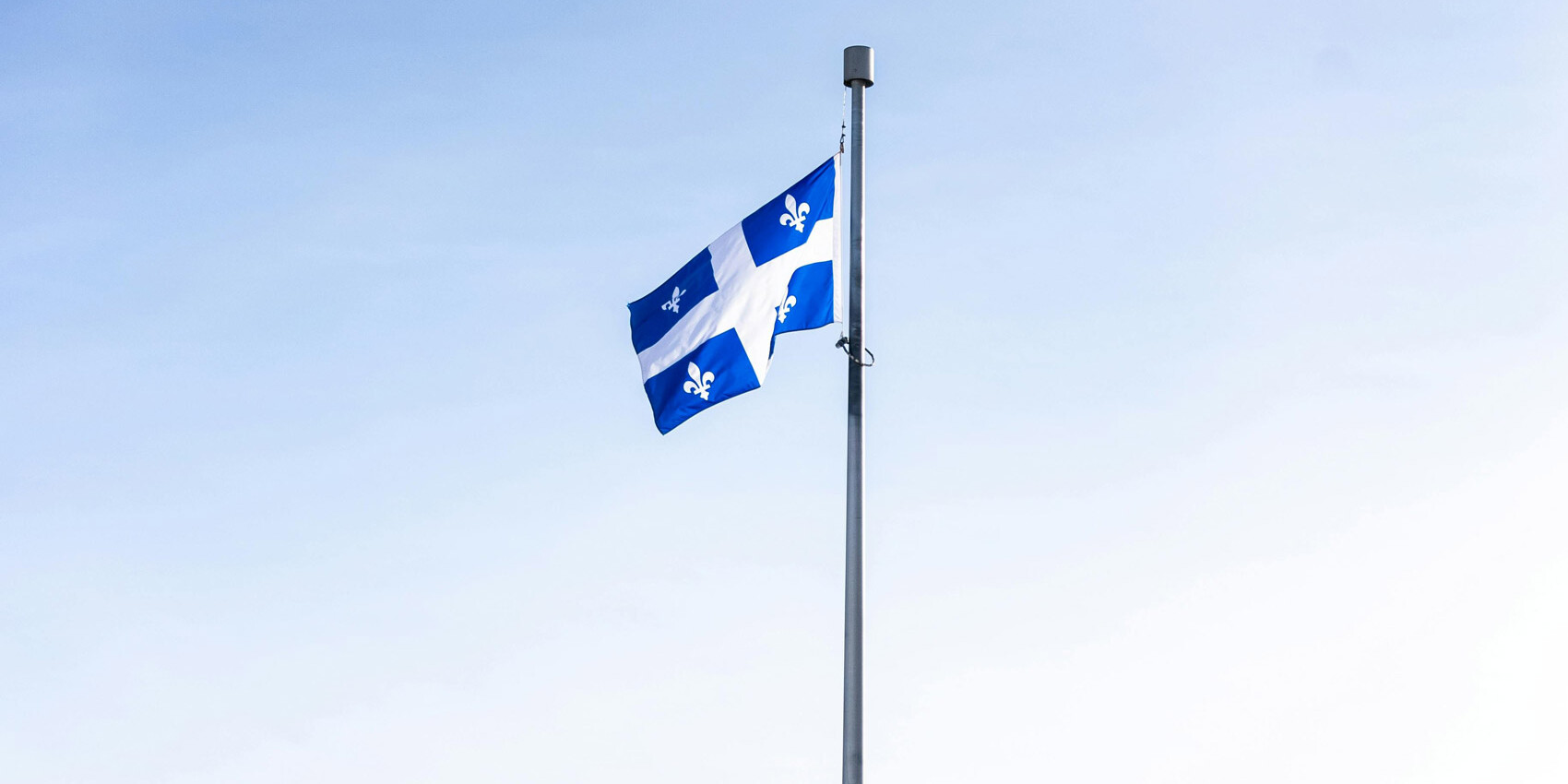
The flag of Quebec, featuring a white cross and four white fleurs-de-lis on blue, flies on a flagpole against a clear sky—a proud symbol of Canadian sovereignty in Quebec identity, culture, and language.

Quebec’s “winning conditions”

The members of the Parti Québécois have spoken, electing as their new leader a young, handsome, gay, and postcocaine André Boisclair, who has assured supporters a vote for him is a vote for a referendum " immédiatement" upon his moving across the aisle in the National Assembly.

People stand and sit along a stone railing, overlooking a city skyline at dusk. The illuminated buildings and vibrant crowd reflect the rich Quebec identity, culture, and language shaped by Canadian sovereignty.

Quebec’s secularism reigns supreme

Like Bill 101, Quebec's (in)famous language law, Bill 62 is likely to be remembered for a long time, both within Quebec and elsewhere in the country.

Environics Institute for Survey Research

701-33 Bloor Street East
Toronto, ON M4W 3H1

info@environicsinstitute.org

Subscribe to our eNews

Subscribe to our eNews to stay apprised of our latest reports, Insights, events, and media mentions.

Stay Connected