

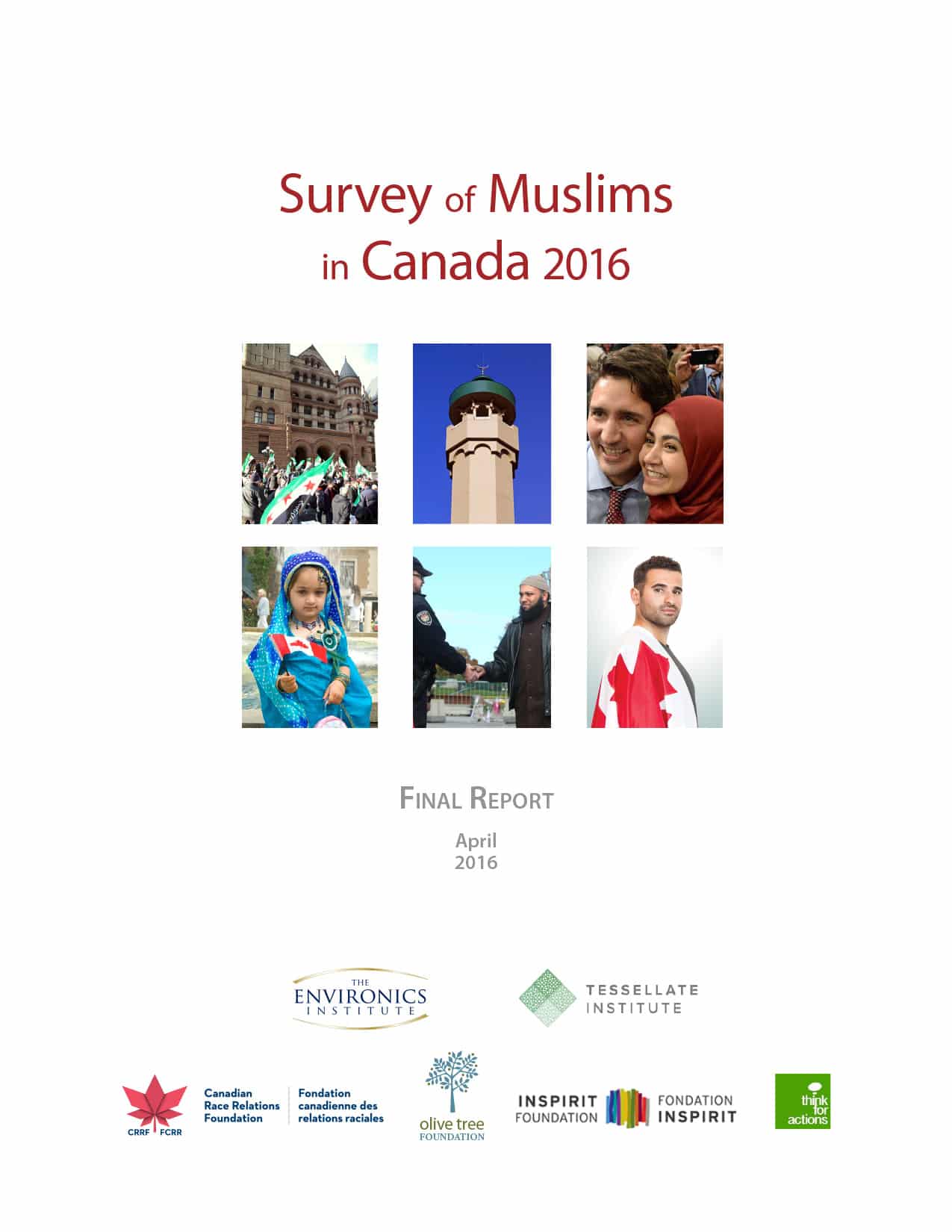
In 2006, the Environics Institute’s inaugural project was the first-ever national survey to examine the relationship between Canadian Muslims and Canadian society-at-large (in the context of 13 other countries from research conducted by the respected Pew Research Center).
In 2016, the Environics Institute partnered with the Tessellate Institute, the Olive Tree Foundation, Inspirit Foundation, The Canadian Race Relations Foundation, and Think for Actions, to update this important research to find out how Muslims in this country are faring almost a decade later.
Muslims represent the fastest growing religious minority in Canada today, but their emerging presence has been contentious, fuelled in part by security concerns (in the long wake of 9/11) and some religious practices (e.g., Sharia law). While Canada has yet to experience the type of ethnic violence and terrorist attacks that have taken place elsewhere, Muslims in this country do not enjoy the acceptance of other religious minorities, and are a focal point for discomfort about immigrants not fitting into Canadian society. By global standards, Canada is a welcoming multicultural society but the Muslim community faces unique challenges with respect to religious freedom, national security profiling and the threat of security detentions abroad.
The survey covers a number of themes, including:
- Personal connections to Canada
- Muslim identity and practice
- Muslim community issues
- Integration into Canadian society
- Treatment of Muslims in broader society
- Extremism and domestic terrorism
The research also includes a complementary survey of Canada’s non-Muslim population, to understand current mainstream opinions about the country’s Muslim community (updating previous research conducted in 2006).
Survey Details
The research consisted of telephone interviews conducted between November 19, 2015 and January 23, 2016, with a representative sample of 600 individuals18 years and older across Canada who self-identified as Muslim.1 The survey was conducted in English, French, Arabic and Urdu (as per respondents’ stated preference), and most of the interviewers were Muslim.
The sample was stratified to ensure representation by age, gender and province, and the final data were weighted so that the national results are proportionate to the country’s Muslim population (based on the 2011 National Household Survey). A sample of this size would be expected to provide results accurate to within plus or minus four percentage points in 95 out of 100 samples (the margin of sampling error is greater for results for regional and other subgroups of the population).
As in 2006, the Institute also conducted a complementary survey of the non-Muslim public, to measure how other Canadians view the Muslim community today, and how this has changed (or not) over the past decade. This survey was also conducted by telephone with a representative sample of 987 non-Muslim Canadians between February 6 and 15, 2016. This sample was stratified by age, gender and province, and provides results accurate to within plus or minus 3.1 percentage points (in 95 out of 100 samples).
For both surveys, the methodology matches the one used in 2006 to ensure comparability of results. The 2006 surveys included 500 Muslims and 2,000 non-Muslims.
Partners
The Environics Institute partnered with the Tessellate Institute, the Olive Tree Foundation, Inspirit Foundation, The Canadian Race Relations Foundation, and Think for Actions.
Project sponsors include the Muslim Council of Calgary and The Canadian Muslim Vote as project sponsors.
Related reading
Survey of Canadian Muslims
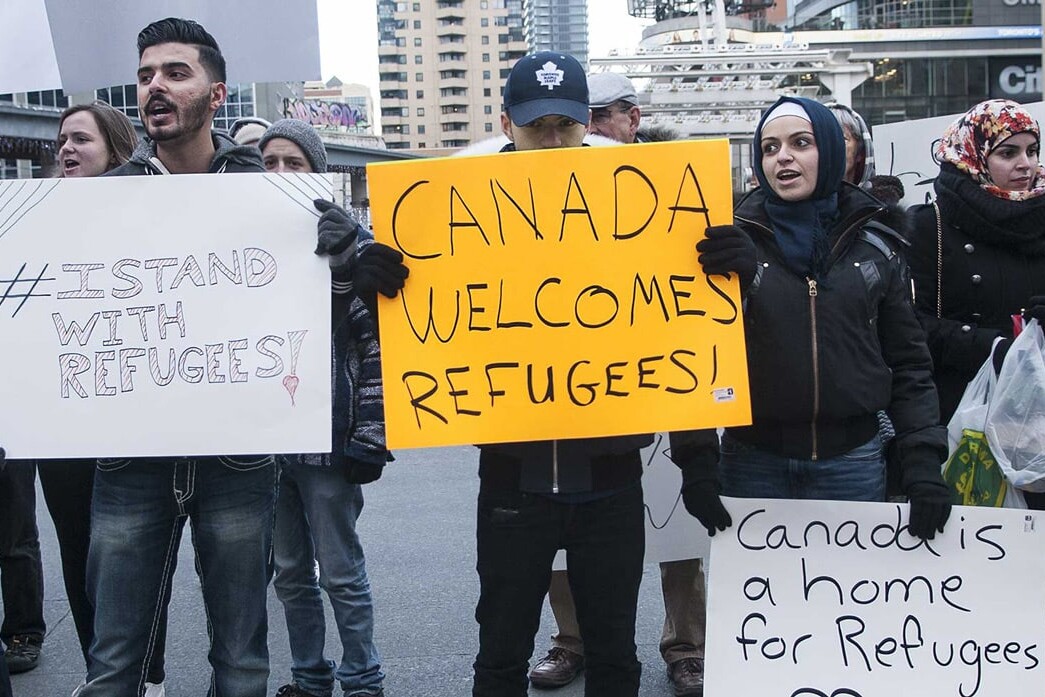
The Institute’s first project was a national survey to examine the relationship between Canadian Muslims and Canadian society at large. This research was conducted as part of Environics Research FOCUS CANADA, and built upon an earlier study conducted by the US-based Pew Research Center with Muslims and non-Muslims that covered 13 countries (but not Canada).

2018 Survey of Jews in Canada
A major survey was conducted in 2018 by the Environics Institute for Survey Research, in partnership with the University of Toronto and York University. The survey is the first of its kind in Canada to explore the perspectives of Jews in Canada, addressing themes of identity, practice and experience.
2023 NIA Ageing in Canada Survey
In less than 10 years, one-quarter of Canada’s population will be aged 65 years and older. Fully understanding the circumstances and evolving needs of this ageing population requires collecting regular and reliable data from older Canadians themselves.